If you’ve ever had to coordinate a plumbing, HVAC, or industrial piping project, you know that getting fittings delivered on time—and in perfect shape—can make or beat your timeline. As a malleable iron pipe fittings supplier, I spend most of my days answering the same question from distributors, contractors, and project managers: “How do you actually ship these things so they show up without dents, cracks, or mix-ups?” It’s not just about slapping a label on a box; it’s a process honed over 12 years of working with malleable iron, a material that’s tough but not unbreakable if handled wrong. Let me walk you through exactly how we do it, from the warehouse floor to your loading dock. Malleable Iron Pipe Fittings

First, let’s start with why malleable iron needs special care in shipping. Unlike plastic or even some brass fittings, malleable iron is cast then heat-treated to make it ductile—strong enough for high-pressure gas, water, and industrial lines, but prone to chipping if it’s dropped or banged around. The threads on these fittings? They’re precision-cut to match standard pipe sizes, so even a tiny dent on a male thread can throw off an entire installation and lead to leaks or delays. That’s why we don’t just pile fittings into a cardboard box and call it good. Every step from order fulfillment to final delivery is designed to protect that precision.
It starts right when your order goes out to the warehouse. Our picking team isn’t just grabbing parts off the shelf; they’re matching each fitting to your order sheet, and we sort by type first: 90-degree elbows, tees, couplings, caps, or reducing crosses. Why? Because mixing sizes and types too early leads to damage—an elbow rubbing against a coupling can scratch the coating on the threads, even if the coating is zinc (our standard for corrosion resistance) or black oxide for underground use. Once sorted, we move to packaging, and this is where most suppliers cut corners, but we don’t.
For small orders (less than 50 fittings, usually for small jobs or repair parts), we use corrugated boxes that are 30% thicker than standard shipping boxes. But it’s not just the box: we line the bottom of each box with crinkle-cut paper cushioning, then layer individual fittings separated by either foam inserts or corrugated dividers. Wait—for threaded fittings, we always cap both ends with plastic thread protectors before placing them in the box. That’s a non-negotiable step. Even a minor dent on a male thread can make it impossible to screw onto a pipe, and a damaged female thread can cause leaks under pressure. For orders with mixed sizes, each size group gets its own divider so they don’t shift during transit. We also label every box with “FRAGILE: PIPE FITTINGS – PRECISION THREADS” in bold red text, not just for show—our carriers flag these boxes for extra care during loading and unloading.
Larger orders (over 50 fittings, often for commercial or industrial projects) go on pallets, and this is where we really invest in protection. First, we wrap groups of the same fitting in shrink wrap with a 2-inch layer of foam padding around the entire bundle, not just on top. Then, we arrange the bundles on a wooden pallet with cross beams every 12 inches to prevent the pallet from sagging under the weight—malleable iron is heavy, so a sagging pallet can cause the bottom layer of fittings to crush. We don’t overpack the pallet either; we leave 6 inches of space at the top of the bundle so we can wrap the entire pallet in heavy-duty stretch film, not the thin stuff you use for household moving. We also add corner protectors made from reinforced cardboard to the edges of the pallet, which are the first places damage happens if the pallet gets bumped during a warehouse move.
But shipping doesn’t end with packaging. We partner with three main carriers for different needs, and we choose based on your project. For local or next-day deliveries, we use a regional carrier with a dedicated fleet that specializes in industrial parts—their drivers are trained to handle heavy, fragile freight, and they scan every pallet at each stop so you can track exactly where your order is. For national deliveries, we use a major LTL (less-than-truckload) carrier that has a priority handling program for metal fittings; their freight handlers are required to secure pallets in the truck with straps, not just stack them on top of other cargo. We never use air freight for malleable iron fittings, not just because it’s more expensive, but because the pressure changes in cargo planes can cause small cracks in the cast iron, especially for fittings with thick walls.
We also do a final quality check before every shipment leaves our warehouse. A member of our team pulls 5% of every order (randomly, so you never know which ones) to inspect for damage: checking threads for dents, coating for scratches, and making sure all fittings match your order. If even one fitting has a small thread imperfection, we pull the entire order and repackage it—no exceptions. We once had a client receive a pallet of elbows with a couple of dented threads, and instead of waiting for a replacement, we rushed a whole new order out via our regional carrier so they wouldn’t miss their installation deadline. That’s the kind of care we don’t cut corners on.
Now, what about special requests? If you need fittings for underground use, we can add an extra layer of rust-proof wax before packaging to protect them during transit. If your project is in a remote area, we can use reinforced wooden crates instead of corrugated boxes for small orders, so they can handle rough handling at local delivery hubs. For custom-sized fittings, we add extra foam around the unique parts to ensure they don’t shift. We’ve even shipped fittings for offshore projects, where salt air is a concern—we seal each fitting in a plastic bag with a desiccant packet to absorb moisture before boxing.
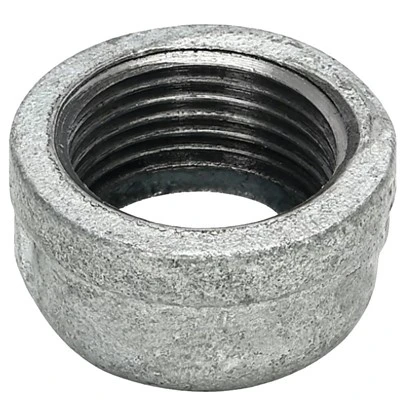
A lot of first-time buyers ask us, “Do you offer damage guarantees?” The short answer is yes. If your order arrives with damaged fittings, we’ll replace them for free and cover the return shipping costs. It’s part of our shipping policy, because we know how disruptive a delayed piping project can be. Last year, less than 0.8% of all shipments had any damage, which we attribute to our packaging process— that’s a number we’re proud of, and we’re always looking for ways to make it better, like switching to 100% recycled foam inserts to be more eco-friendly without sacrificing protection.
Steel Pipe At the end of the day, shipping malleable iron pipe fittings isn’t just about getting a box to your door. It’s about making sure the part you ordered, with the exact threads and size you need, shows up in the same condition it left our warehouse. Whether you’re a contractor working on a residential plumbing upgrade, a factory updating its industrial piping, or a distributor stocking parts for your clients, we handle every shipment like it’s our own project. If you’re ready to place an order or have questions about our shipping options for your specific project, feel free to reach out to our team to discuss your needs. We’re here to make sure your fittings arrive on time, in perfect shape, so you can keep your project moving.
References
- Malleable Iron Pipe Fittings: Manufacturing and Application Standards. National Association of Plumbing-Heating-Cooling Contractors.
- Packaging Guidelines for Industrial Metal Components. International Materials Packaging Association.
- LTL Freight Handling Best Practices for Precision Industrial Parts. Transportation Industry Safety Council.
Shenzhen Gangyuanlong Building Materials Co., Ltd.
As one of the most professional malleable iron pipe fittings manufacturers and suppliers in China, we also support customized service with low price. Please feel free to wholesale premium malleable iron pipe fittings in stock here from our factory. Also, quotation is available.
Address: No.10-1, Jinlong 4th Road, Baolong Community, Longgang Subdistrict, Longgang District, Shenzhen
E-mail: szgylco@gmail.com
WebSite: https://www.szgylco.com/
