Hey everyone, thanks for stopping by today. As someone who’s been in the quartz slab game for over 10 years—watching this material blow up everywhere from coffee shops to office lobbies to retail stores—I get asked this question all the time: Are quartz slabs actually good enough for commercial use? Let’s cut the jargon, skip the sales fluff, and break this down like we’re talking over a coffee (or a quick work break, since you’re probably here because you’re planning a commercial build, right?). Quartz Slab
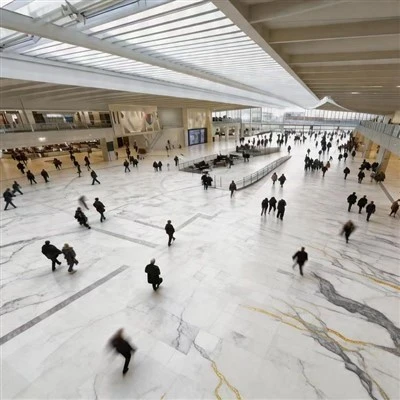
First, let’s be real: Commercial spaces are brutal on surfaces. Think foot traffic that never stops, hot coffee spills, heavy carts dragging across countertops, accidental drops of tools or dishware, not to mention cleaning products that would eat away at cheaper materials if they’re not tough. A lot of people still default to granite for commercial projects, but quartz has changed a ton since it first hit the market in the 90s. Let’s start with the basics of what quartz slabs even are, because that’s key to why they work for businesses.
Quartz slabs aren’t “solid surface” or “natural stone”—they’re a man-made composite, right? We mix about 93% crushed natural quartz (that’s the same stuff in watches and countertops, just processed a little differently) with 7% resin binders and pigment. That ratio matters a lot. A lot of new suppliers cut corners with more resin, but we stick to the 93/7 split because that’s where the durability clicks. Natural granite has pores, even the “low-pore” stuff—you have to seal it every year or it stains. Quartz? No pores at all, because it’s fused together under high pressure and heat. That means red wine, soda, greasy food, even the harsh all-purpose cleaners commercial janitorial teams use? Wipe it up in 10 seconds, no staining, no etching. I’ve had a café client spill a whole pot of espresso on a test slab once, left it for 2 hours, wiped it with a paper towel, and there was zero mark. Try that with a mid-tier granite, and you’re buying a replacement before the end of the week.
But wait, durability isn’t just stain resistance. Commercial countertops get way more abuse than a kitchen at home. How about heat? We’ve all seen a home kitchen take a hot pan off the stove and set it on a counter—if it’s cheap laminate, that’s a burn mark. Even some granite can get dull from a really hot pan. Quartz has a heat resistance of up to 300 degrees Fahrenheit, which is way more than the average hot pan (most stovetop pans are around 200-250, but if a baker leaves a pie tin straight from the oven at 350, our slabs don’t blink). That said, I still tell all my clients: don’t make it a habit. Use a trivet, because even a little extra care goes a long way, but it’s way more forgiving than other materials.
Then there’s scratch resistance. Cash registers rolling over checkout counters, utility carts in a back office, customers dropping keys at a retail counter—those are tiny scratches that add up fast. Quartz has a Mohs hardness rating of 7, same as top-tier granite, and way harder than laminate (which is like a 2 or 3) or even marble (a 3). That means those keys? Scuff at it a little, but no deep gouges. We had a office building client that moved heavy file cabinets across their breakroom counters during a remodel, and after 2 years, the only marks were a couple tiny surface scuffs that buffed right out with a soft cloth and some mineral oil. No replacement needed. That’s a huge cost saver for commercial spaces—repairs and replacements add up way faster than most people realize.
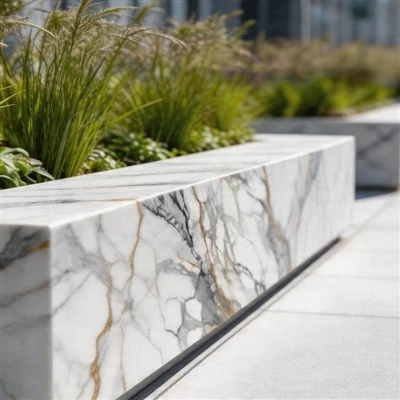
But let’s not ignore the downsides, because I’m not here to sell something that’s not perfect. A lot of people think quartz is all generic white or beige, but modern quartz has come a long way. You can get marble-look veining, concrete finishes, even speckled patterns that mimic granite. But here’s the catch: if you want a really consistent, uniform look (which most commercial brands want for their storefronts), quartz is perfect. But if you’re going for that unique, one-of-a-kind natural stone vibe? Yeah, natural stone might be a better pick. Also, quartz is non-porous, so it’s super hygienic—no bacteria or mold growing in tiny cracks. That’s a big deal for restaurants, hospitals, and schools, where food safety or germ control is a top priority. OSHA even recognizes non-porous surfaces as easier to sanitize, which helps commercial facilities stay compliant.
Wait, another big commercial thing: cost. I hear this all the time—“I thought quartz was more expensive than granite?” Let’s do the math. Upfront, some mid-tier quartz is comparable to mid-tier granite, and high-end quartz is a little more than high-end granite. But the long-term savings? Seal granite every year (that’s $200-$300 a year for a small café counter), repair etch marks every few years, replace countertops every 10 years because of scratches or stains. Quartz? No sealing, almost no repairs, and it can last 20+ years with basic care. So over the lifespan of a commercial space, quartz is actually cheaper. I had a retail client that switched from their initial granite quote to quartz, and they ended up saving almost $15,000 over 15 years when you factor in maintenance and replacements. That’s money they could put back into marketing or inventory.
But hold on, let’s talk about installation, because that’s where a lot of suppliers mess up. Quartz slabs are heavy—usually 20-30 pounds per square foot, so a 10-foot counter is 200-300 pounds. You need a fabricator that knows how to cut quartz, not just anyone that does laminate. If you cut quartz wrong, you can chip the edges, or even crack the slab if you apply too much pressure. That’s why I always tell my commercial clients: don’t go with the cheapest fabricator. We work with trusted installers that have been trained specifically on quartz, and we provide a 10-year warranty on our slabs as long as installation is done right. I’ve seen a few horror stories from clients that went with a cut-rate fabricator, and their quartz had uneven cuts, seams that are visible, or edges that chipped within the first month. So installation matters as much as the slab itself.
Another point for commercial use: sustainability. A lot of businesses now care about their eco-friendly credentials, and quartz is actually a solid pick here. The manufacturing process uses less water than natural stone quarries, and most quartz slabs are made with recycled materials—some brands use post-consumer glass or recycled quartz waste from previous production runs. We source our quartz from suppliers that use 100% renewable energy in their factories, and their products are certified by third-party organizations for low VOC emissions, which is great for indoor air quality in crowded office spaces or retail stores. If your client is big on green building, quartz ticks a lot of those boxes without sacrificing durability.
Wait, let’s address the common myths. I’ve had a few clients tell me, “Quartz gets yellow over time, right?” No, not if it’s a quality slab. Cheap quartz with too much resin might yellow a little, but our slabs use UV-resistant pigments that keep the color consistent for decades. We have a retail store that’s had our quartz counters for 8 years, and you can’t tell where the old slabs end and the new cuts were done. Another myth: quartz is heat-sensitive. Like I said earlier, it’s fine for hot pans, but don’t put a roaring hot grill on it, or leave a curling iron on it for hours. That’s true for almost any surface—even granite can crack from extreme, sustained heat. So it’s all about common sense, not a dealbreaker.
Now, who is quartz perfect for in commercial spaces? Let’s list them: coffee shops, restaurants, retail stores, office breakrooms, schools, hospitals, gyms, even hotel lobbies. Any space that gets high foot traffic, needs easy cleaning, has consistent brand aesthetics, or cares about long-term maintenance costs. And who might want to skip it? If you’re going for a super rustic, hand-hewn look (like a farm-to-table restaurant with exposed stone walls), natural stone might fit better. If you’re working on a very tight budget and only need a counter for a temporary space (like a pop-up shop that’s only open 6 months), laminate might be cheaper upfront, but it won’t last as long.
Let me give you a real example. A few years back, we did a project for a national café chain. They were using granite before, but they were dealing with 10% of their counters getting stained or etched every year, plus sealing costs. They switched to our quartz slabs, and in the last 5 years, they’ve had less than 1% of their counters needing repairs. They also like that they can reorder the exact same slab for new locations across the country, so their brand look is consistent. That’s the thing about commercial use—brand consistency matters. Natural stone can have unique variation, which is great for some places, but for big chains, being able to get the exact same counter everywhere is a huge plus, and quartz delivers that.
So putting it all together: Are quartz slabs suitable for commercial use? The short answer is yes—if you get a quality slab, work with a trusted installer, and don’t expect it to be indestructible. It’s way more durable than laminate, easier to maintain than natural stone, offers consistent aesthetics, and saves you money long-term. A lot of people still haven’t caught up to how much quartz has improved, and I’ve seen way too many businesses settle for materials that end up costing them more in repairs and replacements.
Wait, before you go, if you’re planning a commercial project—whether it’s a new café, a retail remodel, an office buildout, whatever—hit us up for a quote. We have samples you can check, we’ll walk you through the different options, and we can connect you with local installers that know their way around quartz. No pressure, just a straight answer, because that’s how we do things. We don’t push cheap slabs or cut corners, because we’ve seen too many clients regret that.
Quartz Flooring Now, just to make sure we’re all on the same page, here are some of the sources I used to put this together—nothing fancy, just real industry data and studies that back up what I’ve seen over the years:
- National Kitchen and Bath Association (NKBA) – Commercial Surface Durability Guidelines, 2023
- Quartz Manufacturers Association (QMA) – Non-Porous Surface Hygiene Report, 2022
- U.S. Green Building Council (USGBC) – Sustainable Surface Materials for Commercial Projects, 2021
- International Association of Certified Home Inspectors (InterNACHI) – Commercial Surface Maintenance Cost Analysis, 2023
- Mohs Hardness Scale Standard for Construction Materials, ASTM International, 2020
Wuhu Junde New Material Technology Co., Ltd.
As one of the most experienced quartz slab manufacturers and suppliers in China since 1998, we warmly welcome you to wholesale top-quality quartz slab made in China here from our factory. If you have any enquiry about cooperation, please feel free to email us.
Address: No.8 Yulin Road, Xinwu Economic Development Zone, Anhui Province, China
E-mail: 1127319898@qq.com
WebSite: https://www.jundequartz.com/
