Let me take you behind the scenes of a component most people never notice, but that’s the silent workhorse keeping industrial robots, CNC machines, and motion control systems moving with the precision of a surgeon’s hand: the servo cable. For years, I’ve supplied servo cables to factories, automation integrators, and small machine shops across the country, and I’ve lost count of how many times someone has asked me, “What makes a servo cable different from the regular Ethernet or power wire I use every day?” It’s a fair question—on the surface, a cable is just a bundle of copper, insulation, and a jacket, but servo cables are built for a job regular wires can’t handle. Let’s break down how they work, why they matter, and what makes ours the right fit for your motion control needs. Servo Cable
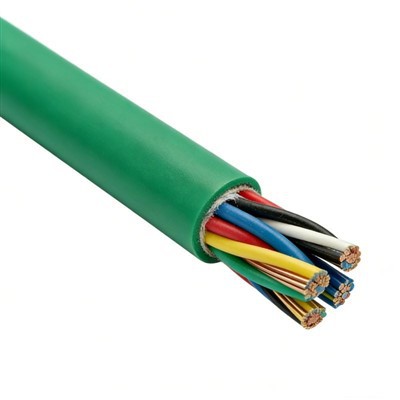
First, let’s start with the basics: what even is a servo system? A servo is a motor paired with a controller and a feedback device (usually an encoder) that lets it adjust speed, position, and torque with extreme accuracy. Unlike a standard AC motor that just runs at a set speed, a servo can stop, start, and adjust its position in milliseconds—think of a robot arm placing microchips on a circuit board, or a CNC mill carving a 3D part with tolerances smaller than a human hair. For that level of precision, every signal and every amp of power has to get from the drive to the motor, and back, without distortion, delay, or interference. That’s where the servo cable comes in; it’s the nervous system of the servo.
Now, let’s get into the science of how a servo cable is built to do that. Start with the core conductors. Regular power wires use solid or stranded copper, but servo cables need stranded copper—lots of it, in fine, twisted bundles. Why? Stranded wire is flexible, which is non-negotiable in industrial settings where the cable is moving hundreds of times a minute through a robot’s joint or a machine’s gantry. If you used solid copper, it would snap after a few thousand flexes, leaving your production line dead. But not just any stranded copper: we use tinned copper, which adds a layer of corrosion resistance, critical for factories with dusty, humid, or chemically active environments like metal stamping plants or food and beverage facilities that use washdowns.
Next, the conductors aren’t just left exposed—they’re insulated, but not with your standard PVC. Servo cables need insulation that can handle two things: high voltage (for power) and high-frequency signals (for feedback, which can run up to 10MHz or more). We use cross-linked polyethylene (XLPE) for the power conductors and fluorinated ethylene propylene (FEP) for the signal conductors. Both are thermally stable up to 150°C, so they won’t melt or break down even if they’re run next to a hot motor that’s generating heat all day. More importantly, they have low dielectric loss, which means the electrical signal doesn’t bleed out as it travels down the cable. A regular PVC insulator might let 10% of a high-frequency encoder signal dissipate as heat or interference, which would make your servo jump or misalign; our insulators keep that loss under 1%, so the signal is perfect every time.
But here’s where the real magic happens: twisting and shielding. Servo systems are full of electrical noise—from the servo drive’s switching power supply, from nearby motors, from variable frequency drives, even from the factory’s power lines. That noise can corrupt the encoder feedback signal, turning a precise position command into a messed-up one, leading to scrap parts, downtime, or even equipment damage. To fight that, every signal conductor pair is twisted together tightly—this is called twisted pair technology, and it’s been around for a century, but servo cables take it to the next level. We use a twist pitch that’s matched to the frequency of the encoder signal: higher frequencies get tighter twists, so the noise that hits one side of the pair hits the other side exactly the same way. The servo drive’s differential receiver can then subtract that noise, leaving only the clean position signal.
Then there’s the shield—this is the servo cable’s bulletproof vest. Power conductors generate a strong electromagnetic field (EMF) as they carry current, and signal conductors are vulnerable to external EMF. The shield blocks both directions. Most entry-level servo cables use a simple aluminum foil shield, which is cheap and works for low-power applications, but if you’re running a high-torque servo in a busy factory, that foil can tear if the cable flexes, leaving gaps that let noise in. That’s why we use a dual shield on all our premium servo cables: a 100% coverage tinned copper braid over top of the foil. The braid is woven so tightly that there are almost no gaps, and the tinned coating makes it corrosion-resistant. We also ground both ends of the shield at the drive and the motor, which eliminates the ground loop that causes annoying, hard-to-track electrical noise in many setups.
Don’t forget the power conductors for the servo motor, by the way. Servo power isn’t like standard single-phase or three-phase power—it’s pulsed width modulation (PWM) power, which is switching on and off thousands of times a second to control the motor’s speed. That creates its own electromagnetic interference, so the power conductors are often twisted too, not just the signal pairs, to reduce the EMF they radiate. We also separate power and signal conductors in the cable with a physical barrier, so the high-power wires don’t sit too close to the delicate encoder wires, even with the shield in place.
Now, let’s talk about the jacket, because a cable isn’t just what’s inside that you can see. Industrial servo cables get dragged, bumped, stepped on, exposed to oil, coolant, UV light, and extreme temperatures. A cheap PVC jacket will crack after a few months of being run over by a forklift or splashed with hydraulic fluid, leaving the inner components exposed. Our servo jackets are made of polyurethane (PUR), not PVC, for three big reasons: first, PUR is far more abrasion-resistant—we’ve tested our cables to withstand over a million flex cycles in our lab, and they still work like new, compared to 50,000 cycles for a standard PVC jacket. Second, PUR is oil-resistant, so it won’t break down if it’s near a machining line where oil drips constantly. Third, it’s flame-retardant and meets all UL and CE standards, so it’s safe for use in industrial environments and compliant for shipment anywhere in North America or Europe.
Wait, let’s address a common myth I hear all the time: more expensive servo cables are the same as cheaper ones. That’s not true, but it’s also not that you have to buy the most expensive cable for every job. For example, if you’re building a small labeling machine that’s only moving its servo a few hundred times a day, a basic foil-shielded, PVC-jacketed cable will work fine. But if you’re supplying servo cables for a 6-axis industrial robot that’s moving 24/7 on a car assembly line, you need the dual-shielded, PUR-jacketed cable with tinned stranded conductors and twisted signal pairs. The difference might be a few dollars per foot, but the cost of downtime when a cheap cable fails at 2 a.m. on a Monday is thousands of dollars—lost production, overtime for maintenance, missed delivery deadlines. That’s why we always ask our customers for details about their application: how much is the cable going to flex? What’s the ambient temperature? Are there other motors or drives nearby? How often is the machine running? We don’t sell a one-size-fits-all servo cable; we build and supply the right cable for your specific needs.
I’ve seen firsthand what happens when you use the wrong servo cable. A customer of mine a couple years ago bought a cheap generic cable for a set of robotic palletizing arms for a distribution center. Within three months, they were having constant position errors—pallets being stacked off by an inch, some falling over when they hit the conveyor. The integrator blamed the servo drive, then the motor, then the encoder, until a tech on the line suggested swapping out the cable. When we pulled the cheap cable apart, we saw that the shield was only 70% coverage, not the 100% advertised, and the conductors were solid copper, not stranded. The flexing had cracked the solid conductors, causing intermittent open circuits in the encoder signal, and the poor shield was letting factory electrical noise corrupt the signal. We supplied them with our standard industrial servo cable, and the position errors stopped overnight. That’s the kind of problem we solve every day.
Another point that a lot of people overlook: cable length. Servo signals can degrade over distance, just like a cell phone call gets fuzzy if you’re too far from a tower. If you run a 100-foot servo cable when the manufacturer recommends no more than 50 feet, you’ll get signal distortion, even with a good cable. We include exact length recommendations for every cable we supply, and we also offer custom-length cables, pre-terminated with the exact connectors you need for your drive and motor. Termination is another critical part of the servo cable system—if the connector isn’t crimped or soldered properly, that’s another point where noise can get in, or the signal can drop out. We have our in-house techs pre-terminate all our cables to UL standards, so you don’t have to worry about getting the crimp tool just right or making a mistake that leads to a bad connection.
Let’s also touch on specialized servo cable applications, because not all servos are the same. For mobile robots, like autonomous guided vehicles (AGVs) that move around a warehouse, you need a servo cable that’s not just flexible, but also resists tearing from being dragged over concrete. We have a hybrid servo cable that combines power, signal, and even ethernet for communication in one jacket, so you only have to run one cable instead of three, reducing clutter and failure points. For washdown applications in food and beverage or pharmaceuticals, we have a servo cable with a smooth, non-porous PUR jacket that’s easy to sanitize, and all metal components are stainless steel to resist corrosion from harsh cleaning chemicals. For high-temperature environments, like furnaces or metal heat-treating lines, we offer a high-temperature servo cable with a silicone jacket that can handle up to 200°C, something regular PVC or PUR can’t do.
I started supplying servo cables 12 years ago because I saw too many automation integrators and machine builders cutting corners on cables to save a few bucks, and it was costing them way more in downtime and repairs. I’ve built my business on being transparent with my customers: I tell them what a cable can do, what it can’t do, and I never pressure them to buy something they don’t need. That’s why so many of my customers have been with me for a decade—they know that when they call, I’ll answer, and I’ll give them a cable that will keep their line running without problems.
If you’re in the market for servo cables, whether you’re building a new machine, replacing a failed cable, or upgrading an existing system, don’t just go for the cheapest option. Think about your application: how much flex, what environment, how much distance between drive and motor, what type of servo you’re using. A bad cable can ruin a perfectly good servo system, but a good servo cable will make your motors run with the precision they’re designed for, reduce downtime, and save you money in the long run.

If you have questions about which servo cable is right for your needs, or you’re ready to place an order, reach out to our team to start the procurement process. We’ll work with you to get the exact cable, length, and connectors you need, with fast turnaround and competitive pricing. Don’t let a faulty cable hold your automation operations back—let’s build a reliable servo cable solution for you.
Extension Cable References
Servo Motor and Motion Control Application Handbook. Rockwell Automation, 2022.
Industrial Cable Design and Installation Standards. National Electrical Manufacturers Association (NEMA), 2021.
Signal Integrity for Motion Control Systems. Tektronix, Inc., 2020.
Cixi Davos Wire & Cable Co., Ltd.
As one of the most professional servo cable manufacturers and suppliers in China, we also support customized service. Please feel free to buy bulk high quality servo cable in stock here from our factory. For price consultation, contact us.
Address: No.3, Lane 91, Ruan Ding Road, Linxi Village, Xiaolin Town, Cixi City
E-mail: roy798@163.com
WebSite: https://www.cj-supplychain.com/
