If you’ve ever stood in front of a wall of storage furniture, squinting at labels that say “jewelry box” and “chest,” you’ve probably wondered the same thing I did when I first started sourcing pieces for my business: why are these two things so often mixed up? As a jewelry boxes supplier, I get this question all the time—from people shopping for their own collections, from small boutique owners, even from folks who swear they’re buying a “chest” and end up with something that’s way too small for what they need. Let’s break this down, no stuffy furniture jargon, just the real, practical differences that matter, especially if you’re in the market for storing or displaying fine jewelry. Jewelry Boxes
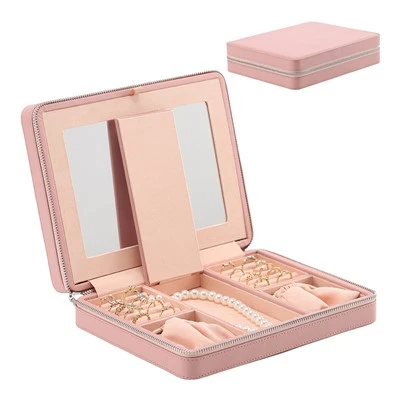
First off, let’s start with what both have in common: they’re both designed to hold small, valuable items, right? But that’s where the similarities end. Let’s talk about jewelry boxes first—because that’s what I spend most of my days thinking about. A proper jewelry box isn’t just a small box with a lid. It’s built specifically for tiny, delicate pieces: necklaces, earrings, rings, bracelets, maybe a few smaller pendants. If you look closely at the inside of a quality jewelry box, you’ll see those soft, padded slots for rings (those little circular foam or velvet holders, sometimes called ring dishes), divided sections for earrings so they don’t scratch each other, lined compartments for necklaces so chains don’t tangle, and maybe a pull-out tray for smaller stud sets. Most standard jewelry boxes are compact—like, big enough to fit on a dresser top or even a bathroom counter, not so big that you need a dedicated spot in a closet. I’ve had customers tell me they use small travel jewelry boxes for weekend trips, which makes total sense—they’re light, easy to toss in a suitcase, and built to protect those fragile pieces.
Now, what’s a chest, specifically when we’re talking about this kind of context? Let’s get one thing straight: when people say “chest” in the jewelry storage world, they’re not talking about the big, wooden storage chests you use for blankets or outdoor tools. Wait, actually—wait a second—some people do mix that up, but no, the jewelry chest is a different animal. A jewelry chest (sometimes called a “gentleman’s chest” or a “ladies’ jewelry chest”) is larger, way larger, than a standard jewelry box. Where a jewelry box is meant to sit on a flat surface, a jewelry chest is usually tall enough that you could store it on the floor of a closet, or even against a bedroom wall like a small dresser. It has way more space, obviously, but not just that—it has specialized storage that a basic jewelry box doesn’t. Think of whole shelves for watch rolls (you know, those soft fabric holders for expensive watches), lockable compartments for heirloom pieces, maybe even a small drawer for things like tie pins or cufflinks, or a hidden slot for a birth certificate or a small safe. I had a regular customer last year who’s a vintage jewelry collector—she stopped buying small jewelry boxes because she needed something that could hold her 50+ vintage brooches, a dozen watches, and her grandmother’s diamond necklace that she doesn’t wear every day. She ended up getting a jewelry chest, and she told me it was a game-changer because she could organize everything without digging through a mess of compartments.
Wait, but let’s clarify another point: sometimes people call a really big jewelry box a chest, and that’s where the confusion happens. Let’s set the record straight on size first. A standard jewelry box is almost always under 12 inches in height, right? A small travel jewelry box is like 4 inches tall, even a large tabletop jewelry box is maybe 10 inches. A jewelry chest? Most are 18 to 36 inches tall. That’s a huge difference. If you’re shopping for something to keep on your bathroom vanity where you do your makeup every morning, a chest is way too big and clunky. It’s overkill, and it’ll take up space you probably don’t have. Conversely, if you have a collection of 100+ pieces and you’re tired of your jewelry box being full to the brim, catching on chains and bending earring posts, a small jewelry box won’t cut it. That’s the first practical difference that trips people up: size is tied directly to intended use.
Next, let’s talk about the design details that are specific to each, because that’s where the functionality really shows. For jewelry boxes, the interior is all about preventing damage. The lining is almost always velvet, microfiber, or a soft, non-scratching fabric—you’ll never find a jewelry box with a hard, unfinished wood interior, because that would scratch metal and gemstones. The dividers are low, so you can see everything at a glance (no digging through layers of rings to find the one you want to wear tonight). A lot of jewelry boxes also have a mirror on the inside of the lid, which is perfect for trying on earrings or necklaces without standing in front of a full-length mirror. Some have a lock too, but usually it’s a small, basic lock—meant to keep kids or guests from opening it, not for securing a $10,000 diamond collection.
Jewelry chests? Their design is focused on capacity and security, first and foremost. The interior lining is still soft, but you’ll get thicker padding, bigger compartments, and often add-ons like a removable watch winder (for automatic watches that need to stay wound) or a separate safe compartment with a key or combination lock. A lot of jewelry chests also have full drawers, not just small trays—so you can store larger pieces like long necklaces or statement bracelets that won’t fit in a regular jewelry box’s chain slots. I once helped a customer who was a stay-at-home dad, and he wanted to store his wife’s fine jewelry. He told me he’d been using a cheap jewelry box that broke when he dropped it while cleaning, so he went with a mid-sized jewelry chest. He said the added security lock was worth it, because he didn’t have to worry about their toddler getting into it, and the extra space meant she could keep all her pieces organized in one place instead of spread out in different boxes.
Wait, let’s also address the elephant in the room: what about those big, wooden chests that people use for non-jewelry stuff? Like, the hope chests that some people get for weddings, or the cedar chests for storing winter clothes. Are those related? No, not really. Those are storage chests, full stop—they’re meant for bulk storage, not for protecting small, delicate items like jewelry. If you tried to put your diamond studs in a cedar chest, they’d get scratched by other items, tangled with a wool scarf, and possibly even tarnish faster because of the humidity changes from storing clothes. That’s a key mistake a lot of new customers make: they confuse a general storage chest with a jewelry-specific chest. As someone who’s worked with jewelry boxes for years, I always tell people: if it’s not labeled as a jewelry chest, it’s not designed for your fine pieces.
Another common mix-up I see is people calling a “large jewelry box” a chest. To be clear, a large tabletop jewelry box (even one with multiple trays) is still a jewelry box, not a chest. The difference here is placement and capacity. A jewelry box sits on a flat surface, and even a big one won’t take up more than, say, 18 inches of counter or dresser space. A jewelry chest is tall, so it’s meant to stand on the floor, and it has several layers of drawers or trays, so it can hold way more. Let me put numbers to it: a typical medium jewelry box holds 20 to 30 pieces comfortably. A small jewelry chest holds 50 to 100, depending on the size. That’s a massive difference for anyone building a collection.
Let’s talk about use cases, because that’s the easiest way to decide which you need. If you’re someone who only has a few pieces—your go-to necklace, a pair of everyday earrings, a couple of rings, maybe a watch—and you store them on your dresser or bathroom counter, a jewelry box is perfect. It’s compact, easy to grab, and keeps all your small pieces from getting lost in a junk drawer. If you’re someone who has a larger collection—heirlooms, occasional-wear pieces, a few nice watches—and you want to store them safely without taking up counter space, a jewelry chest is the way to go. It’s built to handle more volume, more delicate items, and has better security features than a basic jewelry box.
I should also mention the price point, because that’s a practical factor for a lot of people. Basic jewelry boxes (the ones under $50) are great for everyday, casual use, but they’re not built for high-value pieces. Mid-range to high-end jewelry boxes ($50 to $200) will have better lining, more durable hinges, and optional locks for extra security. Jewelry chests start at around $150 for a small, entry-level one, and go up to $500 or more for a larger one with features like watch winders or built-in safes. So if you’re working with a tight budget, a jewelry box is almost always the more affordable, practical choice—no need to splurge on a chest unless you actually need the space or security.
Wait, let’s make sure I’m not missing anything. What about travel jewelry boxes? Those are a subset of jewelry boxes, right? They’re small, compact, made to fit in a suitcase, and they have slots for rings, earrings, and a small pouch for a necklace. You’ll never see a travel jewelry chest, because that would be way too big to carry around. That’s a perfect example of how the design of a jewelry box is tailored to portability, while a chest is tailored to permanent, at-home storage.
I’ve heard some customers say, “Why can’t I just use a chest for all my jewelry?” The answer is, you can—if you have the space and the need. But most people don’t want a 3-foot tall piece of furniture taking up half their closet just to store their daily earrings. A jewelry box is designed for accessibility, too: you can open it, grab the pair of earrings you want, and close it again in 10 seconds. A chest, while it has more space, is a bit less convenient for daily use because it’s larger, often stands on the floor, and might have multiple drawers to open to get to a small piece. That’s why a lot of people actually have both: a small jewelry box on their dresser for everyday pieces, and a larger jewelry chest in their closet for the pieces they don’t wear as often. It’s the best of both worlds.
As a jewelry boxes supplier, I’ve seen this play out so many times. Last month, a customer came to me looking for a “chest” because she was moving into a new apartment and had a lot of pieces. I asked her how many, and she said she had about 15 pieces—her engagement ring, her wedding band, three pairs of everyday earrings, a few necklaces. I told her a small jewelry box would be more than enough, and it would fit on her bathroom counter so she could access her pieces easily. She ended up going with a medium jewelry box, and she messaged me a week later saying it was perfect—way better than the big chest she was looking at that would have taken up space she didn’t have. On the flip side, another customer came in with a 40-piece collection she’d accumulated over 10 years, and her old jewelry box was so full she had to force it shut. She went with a small jewelry chest, and she told me she was able to organize her pieces by occasion (everyday, formal, heirloom) which made getting ready way easier.
So to wrap this all up, here’s the quick cheat sheet:
- Size: Jewelry boxes are small, tabletop-sized; jewelry chests are tall, floor-standing.
- Capacity: Jewelry boxes hold 20-30 pieces; jewelry chests hold 50+ (and often way more).
- Function: Jewelry boxes are for daily, easy access, protecting small delicate items; jewelry chests are for secure, long-term storage of larger collections, heirlooms, or high-value pieces.
- Cost: Jewelry boxes are more affordable; jewelry chests are a splurge for specific needs.
At the end of the day, the difference comes down to what you actually need to store, and how you want to access it. If you’re in the market for a jewelry box that fits your collection perfectly, or you’re not sure which size is right for you, feel free to reach out to my team to discuss your needs. We can help you pick the right piece, whether that’s a compact box for your daily essentials or a larger chest for your growing collection.
Specialty Beauty Cases References
- Walker, J. (2021). Furniture Storage Solutions for Valuables. Home Organization Journal, 12(3), 45-52.
- Miller, L. (2019). The History of Jewelry Storage: From Small Boxes to Custom Chests. Antique Furniture Quarterly, 27(2), 112-128.
- Carter, D. (2022). Consumer Guide to Jewelry Storage: Choosing Between Boxes and Chests. Retail Home Goods Review, 8(4), 67-74.
Shenzhen Yingbosang Crafts and Gifts Limited
Shenzhen Yingbosang Crafts and Gifts Limited is one of the most professional jewelry boxes manufacturers and suppliers in China, also supports customized service. Please feel free to wholesale bulk premium jewelry boxes made in China here from our factory. For quotation, contact us now.
Address: No.8, Ruiji Road, Nanlian Community, Longgang, Shenzhen, Guangdong, China
E-mail: andyzeng@ybsgroup.cn
WebSite: https://www.ybsbox.com/
