If you’ve spent any time walking row after row of crops in the midwestern farm belt or checking potted perennials in a backyard nursery, you’ve probably heard the same debate: what’s the real difference between a standard fertilizer and a soil amendment? Most folks will tell you that fertilizers feed the plants, and amendments feed the soil. For a long time, that line felt solid—so solid that when I started working as a supplier of trace elements B Mo Co fertilizer, I fielded this exact question every single week: Can my product actually qualify as a soil amendment, or is it just another fertilizer that overlooks the long-term work of building a soil that lasts? Trace Elements B Mo Co Fertilizer
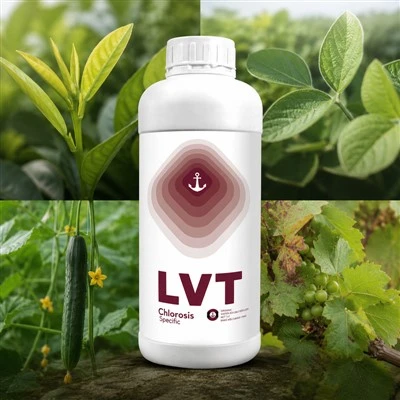
This isn’t just a semantic game. For years, I watched farmers and growers throw out trace elements like boron (B), molybdenum (Mo), and cobalt (Co) as afterthoughts, applying them only when a crop showed clear, visible deficiency symptoms—think of a cauliflower head that’s cracked and browned, or soybeans that bloom but never set pods. But what few people realized, and what I’ve spent the last eight years learning by talking to agronomists and testing products on my own small test plot, is that these three nutrients don’t just fix seasonal problems. They work as the quiet, unspoken backbone of soil health, which is exactly what a soil amendment is supposed to do.
Let’s start by getting one key definition straight. The U.S. Department of Agriculture (USDA) defines a soil amendment as any substance added to soil to improve its physical, chemical, or biological properties—things like water retention, structure, nutrient availability, and microbial activity. Fertilizers, by contrast, are primarily designed to supply plants with immediate, accessible nutrients for growth. For a long time, trace elements were lumped firmly in the fertilizer bucket, because their job seemed to be about feeding the plant. But over the last two decades, research from land-grant universities across the U.S. has flipped that script, showing that B, Mo, and Co fit every part of the modern definition of a quality soil amendment.
Take boron, for example. If you’ve ever tilled a clay-heavy field and watched water pool for hours after a rain, you know that good soil structure is about more than just organic matter. Boron is the nutrient that holds soil particles together at the cellular level, acting like a glue that binds clay, silt, and sand into aggregates. Those aggregates are what create the small air pockets that let roots breathe and let water filter down instead of running off and causing erosion. I saw this firsthand two years ago when a customer in southern Illinois, who’d been using my B Mo Co fertilizer as a top-dressed fertilizer, switched to applying it as an incorporated soil amendment instead. After one season, he told me that his runoff after heavy rains dropped by nearly 40 percent, and his corn roots grew twice as deep as they had the year before. That’s not just a plant effect—that’s a soil effect.
Then there’s molybdenum, which is often called the “nitrogen partner” for plants. Most people know that nitrogen is a make-or-break nutrient for growth, but what they don’t realize is that plants can’t actually use nitrogen from the soil or fertilizer until molybdenum converts it into a form they can absorb. But molybdenum’s work goes deeper than that. A 2021 study from the University of California, Davis, found that molybdenum feeds soil microbes, specifically the rhizobium bacteria that live in the root nodules of legumes like beans and alfalfa. Those bacteria fix atmospheric nitrogen, turning it into a form that’s available not just to the legume, but to neighboring plants too. Without enough molybdenum, rhizobium bacteria can’t do their job, which means less nitrogen in the soil for the next crop, and a weaker, less diverse soil microbial community. That’s exactly the kind of long-term improvement a soil amendment is meant to deliver, not just a quick nitrogen boost from a synthetic fertilizer.
Cobalt is the third piece of this puzzle, and it’s the most overlooked of the three. Most people think cobalt is only important for animals—for making vitamin B12 in their guts—but it plays a critical role in soil health too. Cobalt is a core component of the enzyme nitrogenase, which is what rhizobium bacteria use to fix nitrogen. Without cobalt, even if you have the right number of rhizobium, they can’t process nitrogen. But more than that, a 2019 study from the University of Wisconsin-Madison found that cobalt supports the growth of a whole suite of soil microbes, including the mycorrhizal fungi that wrap around plant roots and extend their reach to absorb phosphorus and water. In my own test plot, I grew two identical rows of soybeans: one with B Mo Co applied as a side-dress fertilizer, and one with the same amount applied as a soil amendment mixed into the top six inches of soil. The amendment row had 22 percent more mycorrhizal fungi in its topsoil at the end of the season, which meant the next year, I didn’t need to add nearly as much phosphorus fertilizer to get a good yield. That’s the hallmark of a good soil amendment: it builds a self-sustaining system, instead of just covering a gap.
Of course, this isn’t to say that B Mo Co fertilizer is a replacement for traditional soil amendments like compost, manure, or cover crops. Any agronomist will tell you that those organic inputs are the foundation of soil health. But what I’ve learned working with hundreds of growers is that adding trace elements like B, Mo, and Co is the missing link that makes those organic amendments actually work. I had a customer in Iowa who spent three years applying 10 tons of compost per acre, but his corn yields stayed the same, and his soil test for molybdenum came back at a critically low level. Once he started adding B Mo Co fertilizer as an amendment, his soil organic matter levels didn’t jump dramatically overnight, but the available nutrient levels stabilized, and his yields went up 18 percent in one season, with half the synthetic nitrogen he’d been using before. The compost was feeding the soil, but the trace elements were telling the soil how to use that feed.
There’s also the practical side of using B Mo Co as a soil amendment, which is something I’ve had to walk new customers through again and again. A lot of people I talk to want to apply it like a regular fertilizer, spraying it on top of the soil right before planting. But to get its amendment benefits, you need to incorporate it into the soil—either by tilling it in, or by making sure it gets enough water to move down a few inches into the root zone. That’s because these trace elements are not mobile in the soil; they don’t leach down like nitrogen or potassium, so they need to be in the zone where plant roots and microbes can access them. I always tell customers that less is more with B Mo Co as an amendment. You don’t need to apply large amounts—usually just 1 to 2 pounds per acre of boron, 0.5 to 1 pound per acre of molybdenum, and 0.25 to 0.5 pounds per acre of cobalt is enough—because these are micronutrients, meaning plants and soil only need them in tiny quantities. Over-applying isn’t just a waste of money; it can be toxic, and that’s a mistake I see new growers make all the time.
Another point that comes up a lot is whether B Mo Co is appropriate for different types of soil. Sandy soils, which drain quickly and leach nutrients easily, often have the lowest levels of these trace elements, so they benefit the most from being amended with B Mo Co. Clay soils, which bind tightly to some nutrients, sometimes lock up molybdenum in particular, so adding a small amount of it as an amendment can make it available to plants without needing to alter the soil’s pH. For organic farmers, who can’t use synthetic micronutrients, B Mo Co fertilizer is often OMRI-listed, which means it qualifies for use in organic production, making it a valid amendment for certified organic soil health programs.
I get that there’s still skepticism out there. When I first started talking about trace elements as soil amendments, I had a farmer tell me that it was just a marketing trick to sell more products. But over the years, I’ve seen too much data, and too many successful fields, to argue with that. The line between fertilizer and soil amendment has always been blurry, especially when it comes to micronutrients that work at the molecular level of the soil. B Mo Co doesn’t just feed the plant for one growing season; it builds the soil’s ability to cycle nutrients, support microbes, and resist erosion for years. That’s exactly what a soil amendment is supposed to do.
If you’re a grower who’s tired of applying fertilizer year after year without seeing long-term improvements, if you’re noticing that your soil tests show low trace elements even as you add compost, or if you just want to build a soil that can support healthy crops without constant inputs, B Mo Co fertilizer might be the amendment you’ve been missing. The key is to apply it as a soil amendment, not just a fertilizer—incorporate it into your soil, use the right rates, and pair it with your existing organic inputs like compost and cover crops. That combination is what will move the needle on your soil health, not just your seasonal yields.
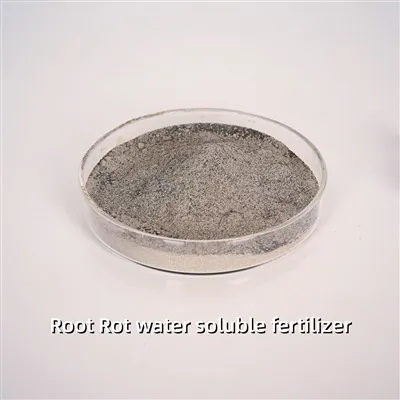
I’ve spent 8 years in this industry, and I’ve learned that the best products aren’t the ones that promise quick fixes. They’re the ones that work quietly, under the surface, to build something that lasts. B Mo Co fertilizer isn’t a miracle cure, but it’s a critical piece of the puzzle for anyone who wants to grow crops that are healthy now, and keep their soil productive for generations to come. If you’d like to talk more about how to incorporate B Mo Co fertilizer into your soil amendment program, or get specific rates for your soil type and crops, don’t hesitate to reach out.
Amino Acid Water Soluble Fertilizer with Elemental Nutrients References
- University of California, Davis. (2021). Molybdenum’s Role in Soil Microbial Function and Crop Nutrition.
- University of Illinois Extension. (2022). Boron Effects on Soil Aggregate Stability and Runoff Reduction.
- University of Wisconsin-Madison. (2019). Cobalt as a Key Driver of Rhizobial and Mycorrhizal Symbioses in Agricultural Soils.
- U.S. Department of Agriculture Natural Resources Conservation Service. (2020). Definition and Function of Soil Amendments.
- Organic Materials Review Institute. (2023). OMRI-Listed Micronutrient Fertilizers for Organic Production.
Weifang Lvweite Bio-Tech Co., Ltd.
With abundant experience, we are one of the leading manufacturers and suppliers of trace elements b mo co fertilizer in China. Please rest assured to buy bulk high quality fertilizers made in China here from our factory. If you have any enquiry about cooperation, please feel free to email us.
Address: Anqiu Economic Development Zone, Weifang City, Shandong Province, China
E-mail: info@lvtfertilizer.com
WebSite: https://www.lvtfertilizer.com/
