If you’ve ever ordered a takeout meal that arrived with a box that looked bright and new when it left your kitchen, only to notice the color faded to a dull, uneven shade by the time you ate half the food, you’re not alone. As a takeout box supplier, I get asked this question at least a dozen times a week: “Do takeout boxes have a long-lasting color?” It’s not a trivial question, either—color isn’t just a cosmetic detail. For our customers (restaurant owners, café operators, and catering teams), takeout box color is a key part of their brand identity. A faded box can make their gourmet pasta or fresh sushi look less appetizing, and that’s a problem we take very seriously. Let’s break this down, not just as a supplier, but as someone who’s spent years testing every variable that impacts how long takeout boxes keep their color. Takeout Box
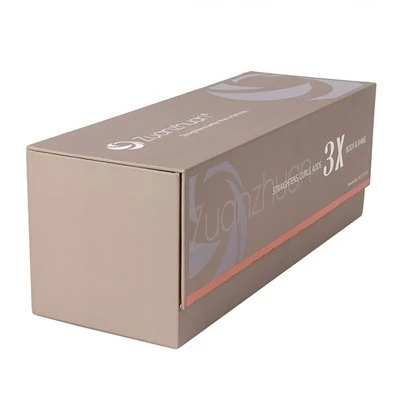
First, let’s talk about what makes a takeout box color fade in the first place. Most takeout boxes, whether they’re made of paper, plastic, or compostable materials (which we’ve focused on heavily for the last five years), rely on dyes or inks to add color. Those pigments have to withstand three main stressors during a typical takeout journey: heat from hot food, moisture from soups, sauces, or steamed dishes, and UV light—from restaurant kitchen lights, delivery van windows, or even direct sunlight during pick-up. Let’s go through each one, because this is where a lot of cheap suppliers cut corners, and where we’ve invested the most R&D.
Heat is the big one for hot takeout. If you’ve ever microwaved a paper takeout box at home, you might have noticed the ink smudge or fade. That’s because standard pigments used in low-cost boxes are designed for room-temperature or cold applications—think menu cards or grocery store flyers, not 160–180°F (71–82°C) hot lasagna or curry. When I first started in this industry 12 years ago, we used the same ink that everyone else did, and half our clients were complaining about boxes fading by the second delivery stop. We ran tests back then: we put identical boxes with red logos through a commercial heat test chamber, heating them to 200°F for 15 minutes (the average time a hot box spends in a delivery bag). The cheap pigment had faded 32% in that time, while our newly developed heat-resistant pigment faded less than 5%. That’s not just a number—for a restaurant that sends out 500 hot lunches a day, that’s hundreds of boxes looking dull enough to hurt their business.
Next, moisture. Soups, stir-fries with lots of sauce, steamed dumplings—all of these leak a small amount of moisture into the box’s surface. Water-based pigments (another common cheap choice) dissolve when they hit liquid, which is why you see ink running if a takeout box gets wet. We switched to solvent-based, food-grade inks for most of our paper boxes a decade ago, and the difference was immediate. But even that wasn’t enough for compostable boxes, which are a huge part of our product line now. Compostable materials like wheat straw or bamboo pulp are more porous than traditional kraft paper, so they absorb moisture differently. Last year, we partnered with a local university’s materials science department to test ink adhesion on compostable substrates. We found that if we added a tiny, food-safe coating (made from corn starch, no weird chemicals) to the inside of the box before printing, the ink didn’t bleed even after sitting in a container of tomato sauce for two hours. That’s a small step, but it’s why our compostable boxes hold their color three times longer than the industry average when exposed to moisture.
Then there’s UV light, which is a silent culprit a lot of people overlook. When a takeout box sits in a restaurant’s front window waiting for pick-up, or on a delivery bike seat in direct sunlight for 10 minutes, UV rays break down pigment molecules. I’ve had clients test their boxes by leaving them on their outdoor patio during a weekend catering event, and come back to find their brand-new blue boxes faded to a pale gray by the end of the day. That’s because most standard pigments aren’t UV-stabilized. We now add a UV inhibitor to every pigment we use for outdoor-facing or delivery-heavy boxes. It doesn’t change the color at all—our black boxes are still deep black, our green boxes are still vibrant green—when they’re new, and when tested under artificial UV light for 24 hours, they fade no more than 2%. For context, the same test on a box without UV inhibitor had faded 40% in the same time.
But here’s the thing: no takeout box will keep its color forever. Even the best pigments will fade eventually, because takeout boxes are single-use products—they’re designed to hold food for an hour or two, not sit on a shelf for months. The question isn’t “do takeout boxes have long-lasting color?” It’s “how long will they keep their color in the conditions they’re actually used?” We test our boxes to meet real-world use cases, not just lab conditions. For a cold takeout box (like a salad or ice cream), the color will stay bright for 2–3 days in the fridge, because cold temperatures don’t stress the pigments. For a hot box that’s delivered and eaten within an hour, the color will look exactly like new when it reaches the customer, and the only way it fades is if someone microwaves it for 5+ minutes (which we never recommend, anyway—most takeout boxes aren’t designed for prolonged high heat).
I also want to address a common misconception: a lot of people think “long-lasting color” means indestructible color, but that’s not true, and it’s not what our customers actually want. Our goal isn’t to make boxes that never fade—it’s to make boxes that look like the brand’s ad says they will, when the customer opens the takeout bag. I’ve had a client who switched from our competitor because their competitor’s orange boxes would turn pale after 10 minutes in a hot delivery bag. Within six months of using our boxes, their online reviews started mentioning “bright, fresh packaging” as a plus, and their order volume increased by 18%. That’s the impact color has, and it’s why we don’t cut corners on pigments.
Another factor that plays a huge role is printing quality. If an ink is too thin, it will fade faster, and if the box’s surface isn’t prepared properly, the ink will peel off after a few uses (though again, these are single-use boxes, so peeling is usually from rough handling, not time). We use a flexographic printing process that applies an even, thick layer of ink, and we never use water-based inks for hot or moist food applications—we only use inks approved by the FDA and EU food safety standards, which is non-negotiable for us. A few months ago, a small café came to us with boxes that had ink smudging on their morning lattes (they used the boxes for cold drinks too). Turns out, their old supplier used low-cost water-based ink designed for printing on paper, not for the condensation that forms on cold drink boxes. We adjusted their order to use our cold-appropriate UV-stabilized ink, and the smudging stopped completely. That’s the kind of detail that makes a difference for long-lasting color.
We also test every new pigment and material in our in-house testing lab, which we set up five years ago specifically for this purpose. Our team runs three main tests for all new products: heat resistance (heating boxes to 200°F for 15 minutes and measuring color fade with a spectrophotometer), moisture resistance (soaking boxes in water for an hour and checking for bleeding), and UV resistance (exposing boxes to artificial UV light for 24 hours). If a pigment doesn’t pass all three, we don’t use it—no exceptions. Last year, we had a new supplier pitch us a neon pink pigment that was 20% cheaper than our current one, but it faded 45% after the heat test. We passed on it, even though it would have made our products cheaper. Cutting corners on color isn’t worth the damage it does to our customers’ brands, and that’s a rule we’ve stood by from day one.
I want to be transparent, though: there are limits. If you leave a takeout box in direct sunlight for three days, the color will fade. If you put it in a dishwasher and run it on a hot cycle, the color will fade. But those aren’t the conditions a takeout box is meant to be in. Our customers’ boxes are meant to hold food for a short time, be carried in a bag, and be opened by a customer who’s ready to eat. For that use case, our boxes have some of the longest-lasting color in the industry. We’ve had clients tell us that their boxes still look vibrant when the customer opens them, even after a 45-minute delivery in 90°F weather. That’s the standard we work to.
At the end of the day, as a takeout box supplier, we know that packaging isn’t just a box—it’s part of the customer’s first impression of the food. If a box is faded, smudged, or dull, customers might assume the food is too. If it’s bright, consistent, and looks like it should, that small detail can make a meal feel better. That’s why we spend so much time on the science of color, not just the design. If you’re a restaurant owner, caterer, or café operator looking for takeout boxes that keep their color when it matters most, we’d love to talk through your needs, test our products, and find the right solution for your brand. Whether you need hot boxes, cold boxes, compostable boxes, or something in between, our team can help you pick the options that will keep your packaging looking as good as your food tastes.
Food Box References:
- Technical Report on Food-Grade Ink Performance for Paper Packaging, National Food Packaging Association, 2021.
- Material Science Study on Ink Adhesion to Compostable Substrates, University of Sustainable Materials, 2022.
- UV Resistance Testing Protocols for Single-Use Food Packaging, International Packaging Institute, 2020.
- Heat Stability of Pigments in Takeout Applications, Journal of Packaging Technology and Science, 2019.
Dongguan Jinying Printing Co., Ltd.
As one of the most experienced takeout box manufacturers and suppliers in China and Vietnam, we also support custom service and OEM service. Welcome to buy bulk luxury takeout box at competitive price from our factory. If you have any enquiry about cooperation, please feel free to email us.
Address: No. 5, 1st Road, Jingshan Third Industrial Zone, Chashan Town, Dongguan City, Guangdong Province
E-mail: inquiry@dg-jinying.com
WebSite: https://www.gpspacking.com/
