Hey there, fellow industrial tech folks! Let’s cut to the chase—if you’ve spent any time wiring up factories, automation lines, or remote industrial sites, you know how messy and expensive old-school cable setups can get. Think: separate cables for data, power, maybe even sensor signals, all running in parallel, taking up half the conduit space, and costing you a fortune in installation and maintenance. That’s where hybrid industrial ethernet cables come in, and if you’re still scratching your head about what they actually are, why they matter, and why your shop floor might be sleeping on ’em, you’re in the right spot. I’ve been selling industrial ethernet cables for a minute now, and I’ve talked to hundreds of techs, engineers, and plant managers who’ve wasted way too much time dealing with cable headaches—so let’s break this down like we’re chatting over a coffee, no jargon required. Industrial Ethernet Cables
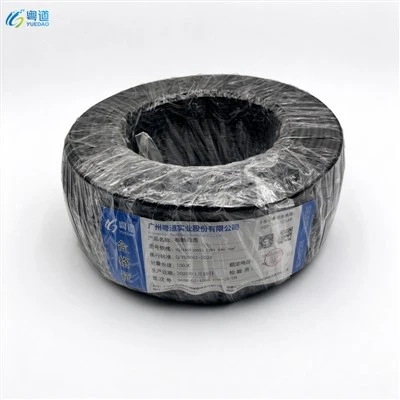
First off, what even is a hybrid industrial ethernet cable, exactly? Let’s start with the basics: regular ethernet cables (you know, Cat5e, Cat6, the ones you run for office Wi-Fi or desktop connections) only do one thing—send data. A hybrid one? It’s two cables rolled into one single jacket. Yup, that’s it, but not just any two—we’re talking high-speed industrial ethernet conductors paired with power conductors, sometimes even extra pairs for things like Profibus, DeviceNet, or other industrial protocols that need a little oomph beyond standard data. Wait, hold on, let’s clarify: this isn’t some cheap consumer hybrid cable you might find online—those are flimsy, made for home use, and will crap out the second you wrap them around a conveyor belt or expose them to industrial grime. The ones we supply are built for 24/7 industrial environments: they’re oil-resistant, flame-retardant, can handle extreme temps (-40°C to 80°C, sometimes lower), and they’re shielded like crazy to block electrical noise from motors, welders, or PLCs (programmable logic controllers, for the uninitiated) that would mess up regular cables.
Let me give you a real example to make this concrete. Last year, we had a client making automotive parts—their old setup ran two separate cables: one Cat6A for ethernet data between their robotic weld arms and the plant’s control room, and a 24V power cable to run the arm’s motors. They had to drill two separate holes in their overhead conduit, pull two sets of wires, hire an electrician and a network tech to make both connections, and by the time they were done, they’d spent 3x what it would’ve cost to run a single hybrid cable. Plus, when one cable went bad? They had to shut down half the line to fix it. With a hybrid, if you only needed one pair, you still had the power running, and if the data pair went bad, you could even source a replacement pair without pulling a whole new cable. Not to mention, the factory floor’s space is gold—those conduit holes, cable trays, and floor channels are packed with stuff; switching to hybrid frees up 50% or more of that space for other gear. That’s not just a convenience, that’s cash saved.
Now, let’s get into the “why” behind hybrid cables—because they’re not just a neat trick, they solve specific pain points that every industrial site deals with. First, let’s talk about space and installation costs. I can’t tell you how many times I’ve heard a plant manager say, “We just don’t have room for another cable.” Whether you’re retrofitting an old factory (where conduit was never designed for modern automation) or building a new facility, every inch of cable tray and every drill hole costs money. Hybrid cables cut your cable count in half, which means less material, less labor, less time spent running wires. For example, a mid-sized packaging plant we worked with a couple years ago was adding 12 new conveyor lines—they originally quoted $18k for separate data and power cables. We supplied hybrid cables for the whole project, and they came in at $9k. That’s half the cost, no loss in performance.
Next up, reliability for power over ethernet (PoE) and other power-hungry devices. Wait, a lot of people mix up hybrid cables and PoE, so let’s clear that up. PoE is when you send power through the data pairs of a regular ethernet cable—so it’s one cable, but it’s only doing data and power in the same pairs. Hybrid cables? They have dedicated power pairs, which is a game-changer for high-power industrial gear—like robotic arms, CCTV cameras in harsh outdoor environments, or even small sensors that need more than the 15.4W standard PoE can deliver. Some of the hybrid cables we sell support up to 100W or more over their power pairs, which is way beyond what regular PoE can handle. That means you don’t need a separate power supply for each device, no extra wires running to every camera or robot, and less clutter. I’ve seen some sites with 50+ cameras on a single hybrid cable run—no wall warts, no messy power strips, just one neat cable.
Another big one is noise and durability. Industrial environments are loud—literally. Motors, welders, generators, even hydraulic pumps all emit electrical interference (EMI/RFI) that can make regular ethernet cables drop connections, lag, or even stop working entirely. Hybrid cables are almost always shielded: we use double-shielded designs (foil shield plus braided shield) for our industrial hybrid cables, which blocks that noise. Also, their jackets are made from materials like PUR (polyurethane) or PVC that are resistant to oil, chemicals, and abrasion—so if a cable gets dragged across a concrete floor, rubbed by a conveyor belt, or exposed to coolant from a machine, it’s not going to fray or break like a cheap consumer cable. I’ve had a client in a steel mill tell me their old regular cables would last 6 months before getting chewed up by machinery; our hybrid cables are still going strong 2 years later.
Wait, but let’s talk about the different types of hybrid cables out there, because not all are created equal. You’ve got two main categories, roughly: one is “data + low-voltage power” for things like sensors, small cameras, or light automation devices (24V, 48V power). The other is “data + high-voltage power” for bigger gear—like robotic arms, conveyor motors, or even small control panels (120V, 240V). Then there’s also hybrid cables that include extra pairs for fieldbuses, like Profinet, Modbus, or EtherNet/IP, which are super common in industrial automation. Those are great if you need to run both standard ethernet and a fieldbus signal in one cable, so again, less clutter. Just make sure you’re buying the right type for your use case—we get calls all the time from people who ordered a low-voltage hybrid and it didn’t work for their 240V motors, so always double-check the voltage rating and the number of data pairs you need.
Now, let’s address the elephant in the room: are hybrid industrial ethernet cables more expensive than regular separate cables? Short answer: initially, maybe a tiny bit more per foot, but over the life of the cable, they’re way cheaper. Let’s do the math: if you buy two separate cables, that’s $0.50/ft for the ethernet cable and $0.30/ft for the power cable, total $0.80/ft. A hybrid cable might be $0.55/ft, so that seems like more at first. But then you save on installation: electricians and network techs charge $75-$150 an hour, and running two cables takes twice as long as running one. If a single run is 100ft, that’s 2 hours of labor vs 1 hour—saving $75-$150 right there. Plus, less downtime when something breaks: if you have two cables, one breaks, you might have to shut down a part of the line; with a hybrid, you only shut down half, or if the whole cable breaks, you can swap it way faster because there’s only one cable to pull. And over time, fewer replacements because they’re more durable—so that $0.05 per foot difference is nothing compared to the savings.
I should also mention a common mistake people make: using consumer hybrid cables for industrial jobs. Those things are made for home offices, not for being dragged, exposed to oil, or running next to a welder. We’ve had a client once who tried to use a cheap hybrid cable from a big-box store for their assembly line—lasted 3 weeks before it started dropping data, and they had to tear out the whole line and replace it with our industrial-grade ones, costing them way more than if they’d just bought the right cable in the first place. That’s the thing with industrial gear: skimping on the cable always costs you more in the long run.
So, who should be using these? If you’re in automotive, food and beverage, pharmaceuticals, warehouse automation, or any industry with a lot of automation, robotic gear, or sensors—you should be looking at hybrid cables. Even if you’re a smaller shop with just a few conveyor lines, the space and cost savings add up. We’ve even had a small craft brewery use our hybrid cables to run their inventory sensors and brewery controls—they went from 8 separate cables to 2, saved $2k on installation, and haven’t had a single connection issue in a year.
Wait, let’s wrap this up with what I always tell folks when they come to me confused about their cable needs: don’t overcomplicate it. If you’re running data and power to a device, ask yourself if you can fit one cable instead of two. If space is tight, if you’re dealing with EMI, if you’re tired of downtime from cable failures—hybrid industrial ethernet cables are almost always the better bet. They’re not some fancy new tech that’s unproven; they’ve been around for over a decade now, and every major automation manufacturer uses them.
If you’re ready to stop dealing with cluttered cable trays, sky-high installation costs, and constant downtime from bad cables, we can help you pick the right hybrid cable for your exact setup. We’ve got options for low-voltage, high-voltage, shielded, unshielded, every protocol you can think of—just tell us what devices you’re connecting, how long the run is, and what environment it’s going in, and we’ll hook you up with something that fits. No pressure, just straight talk, no jargon, no upselling stuff you don’t need.
If you’re curious or ready to chat, reach out to our team to talk through your project needs. That’s all I’ve got for today—next time, we’ll dive into how to test your hybrid cables to make sure they’re performing like they should, so you can avoid that last-minute downtime panic. Catch you later!
Robot Cable References:
- "Industrial Ethernet Cable Standards and Applications", Industrial Technology Association, 2022
- "Hybrid Cables for Industrial Automation: Cost-Benefit Analysis", Automation World Magazine, 2023
- "EMI/RFI Mitigation in Industrial Cabling", International Electrotechnical Commission (IEC) Technical Report, 2021
- "Power over Ethernet (PoE) vs. Hybrid Power-Data Cables for Industrial Use", Control Engineering, 2022
Guangzhou Yuedao Industrial Co., Ltd.
Guangzhou Yuedao Industrial Co., Ltd. is one of the most experienced industrial ethernet cables manufacturers and suppliers in China, featured by quality products and good price. Please rest assured to buy premium industrial ethernet cables in stock here and get free sample from our factory. We also accept customized orders.
Address: Room 401, 3‑4/F, No.13 Guandao Jinsha Road, Xintang Town, ZengCheng District, Guangzhou
E-mail: yuedao2026@gmail.com
WebSite: https://www.yidcable.com/
