Hey guys, let’s cut to the chase—if you work with timing chains (and let’s be real, that’s why you’re here), you know a chain is only as good as its lubrication. As a timing chain supplier, I get asked all the time: “What’s the big deal with this lubrication system? Why can’t I just douse the chain in oil and call it a day?” Spoiler: it’s way more strategic than that. Today, I’m breaking this down like I would with a shop floor technician—no fancy jargon, just what matters for keeping your chains running and your customers happy. Timing Chain
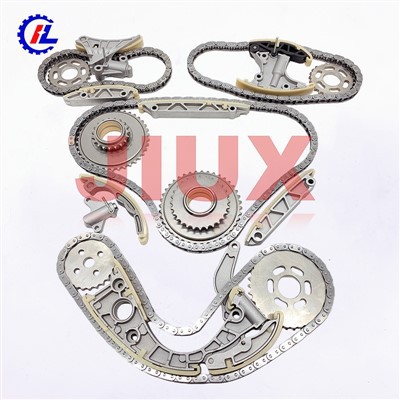
First, let’s start with the basics: a timing chain’s whole job is syncing your engine’s crankshaft and camshaft. If that sync’s off? Piston-valve collision, bent parts, a $10k repair bill—no one wants that. But without proper lubrication, the chain’s gonna wear out way faster than it should. I’ve seen timing chains last 150k+ miles with the right lube setup, and I’ve seen ones snap at 50k because someone skipped this step. So what’s the lubrication system actually doing here? It’s not just reducing friction—it’s carrying away heat, flushing out tiny metal shavings, and preventing rust from those cold engine starts.
Now, let’s talk about how most modern engines do this. This isn’t some old-school carburetor trick—engine lubrication systems are precision-engineered, and timing chain lube is a key part of that. There are two main setups you’ll see: splash lubrication and pressure-fed lubrication. Let’s keep it real—splash is mostly for older, smaller engines, like in old compact cars. They’ve got a trough at the bottom of the oil pan, and as the crank spins, it sloshes oil up onto the timing chain. It’s simple, but super inconsistent. If the chain’s tight, it doesn’t get enough oil; if it’s loose, too much oil builds up and causes drag. That’s why we mostly use pressure-fed now, and that’s where the good stuff happens.
Pressure-fed systems hook right into the engine’s main oil gallery. The oil pump pushes oil through small passages that lead straight to the timing chain assembly—usually through the cylinder head or the timing cover. For example, in most modern four-cylinder engines, there’s a tiny hole drilled into the camshaft sprocket that sprays oil directly onto the chain’s rollers. Some V8s even have a dedicated oil jet aimed at the slack side of the chain, where tension is lowest and wear is highest. Wait, let’s get specific on the chain’s parts here—your timing chain has rollers, pins, and plates. The oil doesn’t just coat the outside; it gets between the rollers and pins to eliminate metal-on-metal contact. That’s the secret to long life. If the lube only sits on the surface, the internal parts are still grinding together.
But here’s where a lot of people mess up: the lubrication system isn’t just the oil itself. There are supporting parts that make it work. Take timing chain guides and tensioners, for example. Good tensioners (we make these, by the way) have tiny oil passages that let oil build up pressure to keep the chain tight. If the tensioner isn’t getting enough oil, the chain slaps around, wears out the guides, and needs replacement way sooner. Same with the guides—they’re usually made of plastic or composite, and they need a constant oil film to keep from wearing down. I’ve had customers tell me their timing chain broke and they replaced the chain but not the guides—duh, that’s a mistake. The guides are part of the lubrication system’s delivery, too.
Another thing: oil grade matters. If you’re running a synthetic 5W-30 in a cold climate, that’s way different than a 15W-40 for a heavy-duty truck. Too thin, and it’ll blow past the small oil passages meant for the chain—no lube, early wear. Too thick, and it can’t seep into the roller-pin gaps. I recommend checking your engine’s manual, but most modern timing chains work best with a mid-weight synthetic oil. And don’t skip oil changes—old, sludge-caked oil clogs those tiny passages in the timing cover. I’ve seen engines with perfectly good timing chains ruined because the owner ran 10k miles past the oil change; sludge blocked the oil jet, and the chain seized up.
Wait, let’s talk about something we deal with every day: aftermarket timing chain kits. A lot of guys swap out a worn chain and just reuse the old lubrication setup. Bad move. When you install a new chain, you should prime it with engine assembly lube before starting the engine for the first time. Assembly lube is thicker than regular oil, so it sticks to the rollers and pins while the oil pump builds pressure. If you skip that, the first few seconds after startup are metal-on-metal—way more wear than the chain can handle. We even include a small tube of assembly lube with most of our timing chain kits because we know how easy it is to forget that step.
Now, let’s address the myths I hear all the time. “More oil is better.” No, way too much oil causes aeration—oil mixes with air and turns foamy, so it can’t lubricate properly. The foam also builds up pressure, which can blow seals. “A timing belt and chain use the same lube.” Nope! Timing belts are rubber, so oil breaks them down over time. Chains are metal, so they need that oil film. That’s why you never use engine oil on a timing belt, and why belts use totally different setups (or sometimes none at all, since they’re in a dry cover). “Lubrication only matters at high RPM.” Wrong—cold starts are the worst for wear. When the engine’s off, oil drains back into the pan. The first 30 seconds of startup, the chain is dry until the oil pump kicks in. That’s why assembly lube is critical— it stays on during that dry startup.
So what does a good lubrication system for a timing chain actually look like, step by step? Let’s break it down for anyone putting together an engine or swapping a chain:
- The oil pump pushes clean, grade-appropriate oil from the pan through the main engine gallery.
- Dedicated oil passages feed that oil to the timing cover, usually with a jet or spray hole aimed at the chain’s working side.
- The oil seeps between the chain’s rollers and pins, reducing friction and carrying away heat.
- Tensioners and guides use that oil pressure to keep the chain aligned, preventing slack and slapping.
- The oil then drains back into the pan, taking tiny metal shavings with it to the oil filter—so the filter catches the gunk before it circulates again.
If any of those steps break, you’ve got a problem. For example, a clogged oil jet (from sludge) means the chain doesn’t get oil. A faulty tensioner that doesn’t get oil can’t hold tension, so the chain jumps. That’s why when you diagnose a timing chain issue, you shouldn’t just check the chain itself—you need to look at the lubrication system, too. I can’t tell you how many times a customer brings in a “broken chain” when it was a $10 oil jet that was clogged.
As a timing chain supplier, we test all our chains with different lubrication setups in our lab. We run them on dynos for thousands of hours, checking for wear and lube distribution. What we’ve found is that even a small improvement in oil delivery can extend a chain’s life by 30% or more. That’s why we work with engine builders to optimize the lube setup for our chains—we don’t just sell a part, we make sure it works with the rest of the system.
Let’s also talk about heavy-duty applications, like trucks or performance cars. These engines run at higher RPMs and higher loads, so their lubrication systems are more robust. For example, a diesel truck might have two oil jets for the timing chain, plus a separate oil cooler to keep the oil from breaking down. Performance cars might use a dry sump lubrication system, which means oil is pumped directly to the chain instead of relying on a pan slosh—perfect for high-speed track driving where oil can slosh away from the pickup tube.
Now, what should you do to make sure your timing chain’s lubrication system is working right? Let’s keep this actionable:
- Stick to your manufacturer’s oil change schedule. No exceptions. Sludge is the enemy here.
- When swapping a chain, always inspect the oil passages in the timing cover. If they’re clogged, clean them out before installing the new chain.
- Use assembly lube on the new chain before first startup. It’s a 2-minute step that saves you from a big repair.
- Check your tensioners and guides during routine maintenance. If the tensioner is leaking or the guide is worn, replace them—they’re part of the lubrication system.
- Don’t use aftermarket oil additives unless your engine manual says it’s okay. Some additives can break down the oil film that protects the chain.
At the end of the day, a timing chain’s lubrication system isn’t a complicated black box—it’s a mix of the right oil, the right delivery parts, and regular maintenance. I’ve been in this industry for 12 years, and I’ve seen firsthand how a good lube setup turns a $50 part into a $500,000 engine that runs for 200k miles. The opposite is also true: skip the lube, and even the best timing chain will wear out fast.
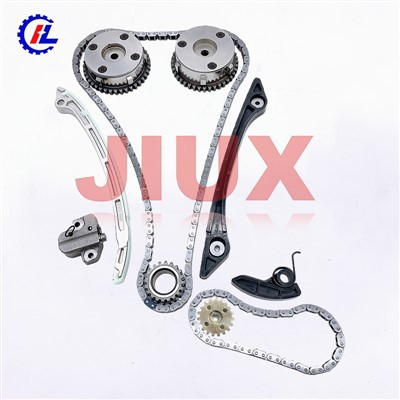
If you’re an engine builder, mechanic, or someone who’s tired of replacing timing chains too often, let’s chat. I can walk you through which timing chain and lubrication setup works best for your application, whether it’s a daily driver, a truck, or a performance build. We’ve tested our chains in all kinds of conditions, and we’ve got the data to back up their longevity. Don’t let a bad lubrication system ruin your next build—reach out and let’s get you set up right.
Fit for SUZUKI References:
- Society of Automotive Engineers (SAE) International. “Lubrication of Timing Chains: Friction, Wear, and Heat Management.” SAE Technical Paper Series, 2021.
- Automotive Parts Manufacturers Association (APMA). “Timing System Components: Lubrication Requirements and Best Practices.” APMA Industry Bulletin, 2022.
- Mobile, Inc. “Engine Oil Selection for Timing Chain Systems: Matching Viscosity to Operating Conditions.” Mobil Commercial Lubricants Technical Guide, 2020.
- International Engine Builders Association (IEBA). “Aftermarket Timing Chain Installation Best Practices.” IEBA Workshop Manual, 2021.
Huzhou Hongli Auto Parts Co., Ltd.
With abundant experience, we are one of the most professional timing chain manufacturers in China. Please rest assured to buy customized timing chain at competitive price from our factory. If you have any enquiry about cooperation, please feel free to email us.
Address: Building 16, No.50 / Building 18, No.58, Dadongwu, Lianshi Town, Nanxun District, Huzhou, Zhejiang, China
E-mail: jiux@timingkit.cn
WebSite: https://www.jiuxkit.com/
