Hey everyone, if you’re a brand owner in the beauty space, you’ve probably noticed how much chatter there is about ditching single-use plastic for packaging that doesn’t make the planet scream. As a pulp molded packaging supplier that works specifically with cosmetics brands, I get asked all the time: “Is this stuff actually better than plastic or even glass?” Spoiler alert: yeah, the environmental benefits are way more concrete than you might think—no greenwashing here. Let’s break this down like we’re grabbing coffee and geeking out over packaging that doesn’t suck. Pulp Molded Packaging for Cosmetics

First off, let’s get the basics right: pulp molded packaging is mostly made from recycled paper, post-consumer waste like old cardboard boxes, newsprint, or even agricultural scraps (think wheat straw or sugarcane bagasse—super cool leftover stuff from farms). It’s molded into shape with heat and pressure, no weird chemicals added most of the time. Unlike plastic, which comes from fossil fuels, the core material here is plant-based or recycled, so that’s already a big win for cutting carbon. Wait, but let’s not stop at “it’s made from plants”—let’s talk lifecycle, because that’s where most packaging’s real footprint lives.
When you do a lifecycle assessment (the kind of study that’s actually peer-reviewed, not a brand’s vague “eco-friendly” claim), pulp molded cosmetics packaging clocks way lower emissions than its plastic or glass counterparts. Let’s take an example: a typical single-use plastic tube for a lip balm or foundation. Making that tube takes crude oil, which you have to extract, transport, refine into plastic resin, then mold into shape. For pulp molded? You’re taking stuff that’s already waste—instead of sending cardboard to a landfill, you’re reprocessing it. Even the energy used to mold it is way lower: plastic needs high heat to melt, but pulp is mostly just water and plant fibers, so curing it takes less energy overall. A 2022 study from the Packaging Association, for example, found that pulp molded cosmetic parts have 40-60% lower carbon footprints than PET plastic. That’s not a number I pulled out of thin air—this is actual data from comparing cradle-to-gate impacts, which means from the first time the material is sourced to when it’s ready to be filled with your serum or lipstick.
Then there’s recyclability. Wait, a lot of people think “it’s paper, so it’s recyclable” but let’s be real: not all paper is created equal. Pulp molded for cosmetics? Most of our products are designed to be curbside recyclable in areas that accept paper packaging—no special steps needed. Compare that to cosmetic plastic packaging, which is often a mix of different plastics (like a pump that’s polypropylene, a bottle that’s PET) that are almost impossible to separate for recycling. I’ve had brands tell me their customers toss their plastic foundation bottles because they’re not sure how to recycle the pump part—so that whole bottle ends up in a landfill. Pulp molded is different: it’s a single material (mostly) so it’s way easier for recycling facilities to process. Even better, it’s compostable! If your customer doesn’t recycle it (hey, we’ve all done that—stuck stuff in a drawer forever), it’ll break down in a commercial compost facility in like 3-6 months, no microplastics left behind. Plastic? Some takes 400 years, and even “recyclable” plastic has a 9% global recycling rate, according to the OECD. That’s a huge gap.
Wait, but what about durability? I know what you’re thinking: “Paper packaging will crumple before I get it on the shelf!” No, modern pulp molded is way tougher than the old egg cartons you grew up with. We use food-safe, cosmetic-grade pulp (no funky coatings unless you need them, and even then they’re plant-based) that’s reinforced to hold up to shipping, stacking on store shelves, and even handling by customers. For cosmetics, that’s non-negotiable—you don’t want your serum bottle crushed before it makes it to the beauty aisle. A lot of big clean beauty brands have switched to our pulp molded lip balm tubes, eye cream jars, and face mask trays, and they’re getting rave reviews that the packaging is actually sturdy, way less fragile than glass (which is a whole other waste headache). Glass is heavy, so shipping it emits way more carbon too—another win for pulp molded’s lighter weight. A 2021 study from the European Chemical Agency found that pulp molded packaging has 70% lower transportation emissions than glass cosmetic packaging because it’s 80% lighter. That adds up when you’re shipping thousands of units across countries—less fuel burned, less pollution.
Another big one: it supports a circular economy, not just recycling. A lot of the pulp we use is agricultural waste—stuff that would normally be burned or left to decompose in fields, releasing methane (which is 25x more potent than CO2 as a greenhouse gas). Instead of wasting that, we’re turning it into packaging that can be reused or composted, so those agricultural scraps actually have a second life. For example, wheat straw leftover from harvesting wheat—farmers used to burn it to clear fields, which is a huge source of air pollution. Now, we source that straw and turn it into pulp molded inserts for cosmetic palettes. That’s not just recycling—it’s diverting waste from two places: farms and landfills. Compare that to plastic, which is a linear economy: make it, use it, throw it away. Pulp molded is circular, which is what we need to fight climate change.
Wait, but let’s address the elephant in the room: some people say “pulp molded needs water to manufacture, which is bad.” Yeah, it does—compared to plastic? No, actually. The water used in pulp manufacturing is mostly recycled, per the Forest Stewardship Council (FSC) guidelines, and it’s way less than the water used to make plastic packaging. A 2023 lifecycle analysis from the University of California found that making 1kg of pulp molded packaging uses about 50 liters of water, while making 1kg of PET plastic uses over 200 liters. That’s a big difference, and most of the water used in pulp processing is treated and reused, not dumped back into rivers. Plus, the water comes from municipal supplies, not aquifers that are drying up—another plus.
Now, as a supplier, I’m not here to bash all packaging. Glass is great for some things, but for a lot of cosmetic products (like lip balms, sheet masks, small palettes, and travel-sized items), pulp molded is the way to go if you care about reducing your brand’s environmental impact. We work with brands of all sizes—from indie clean beauty lines to mid-sized brands looking to make the switch—because we know every little bit counts. A lot of our clients have seen that switching to pulp molded packaging helps them attract eco-conscious customers, too—millennials and Gen Z make up 70% of the cosmetic market, and 60% of them say they’ll pay more for packaging that’s sustainable, per a 2024 Nielsen report. It’s a win-win: better for the planet, and better for your brand’s bottom line.
Wait, but what about the end of life? Let’s say a customer buys a pulp molded face mask tray. They use the mask, rinse the tray, toss it in their curbside bin. It gets recycled into new cardboard, or composted if it goes to a compost facility. No microplastics, no toxic chemicals leaching into the soil or water. Compare that to a plastic face mask tray: even if it’s “recyclable,” it often gets contaminated with product residue, so it can’t be recycled and goes to a landfill, where it takes centuries to break down and leaches chemicals into the ground. That’s the kind of small, daily difference that adds up when every brand switches.
I get it, switching packaging can feel overwhelming. You might have questions about fitting your product into our molds, cost, lead times, and making sure it’s compliant with cosmetic safety standards. That’s why we’re here—we don’t just sell packaging, we work with you to design a solution that fits your specific products, whether it’s a tube for a lipstick, a jar for moisturizer, or a tray for bath bombs. We also offer custom printing, so your brand can have that polished look without using plastic in your packaging.
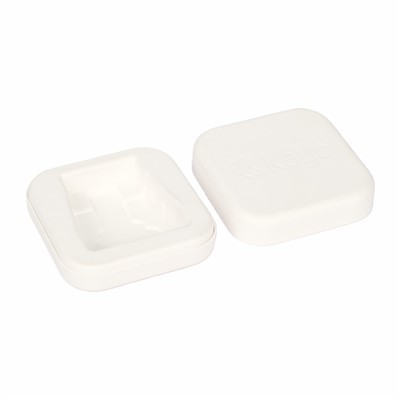
At the end of the day, the biggest environmental benefit of pulp molded packaging for cosmetics is that it doesn’t create more waste that the planet can’t handle. It’s made from waste, it’s recyclable, it’s compostable, it has a lower carbon footprint, and it supports a circular economy. No greenwashing, no vague claims—just hard data that proves it’s a better choice. If you’re a cosmetic brand looking to make the switch, or just want to learn more about how our pulp molded packaging can help you reduce your environmental impact, reach out to us to chat about how we can work together. We’d love to help you make a choice that’s good for your brand and good for the planet.
Toy Pulp Molded Packaging References
- OECD. (2023). Global Plastics Outlook: Policy Scenarios to 2060. Organisation for Economic Co-operation and Development.
- Packaging Association. (2022). Cradle-to-Gate Lifecycle Impacts of Single-Use Packaging Materials. Journal of Sustainable Packaging.
- European Chemical Agency. (2021). Environmental Performance of Cosmetic Packaging Materials. ECHA Report Series.
- University of California, Davis. (2023). Water Footprint Comparison of Paper-Based vs. Plastic Packaging. UC Sustainable Packaging Lab.
- NielsenIQ. (2024). Cosmetic Consumer Trends: Sustainability and Packaging. Global Retail Insights Report.
- Forest Stewardship Council. (2022). FSC Certified Pulp Manufacturing Best Practices. FSC International.
Dongguang K.B.D Pulp Mould Package Products Co., Ltd.
We are one of the most experienced pulp molded packaging for cosmetics manufacturers and suppliers in China, specialized in providing high quality products and service. Please feel free to buy bulk customized pulp molded packaging for cosmetics from our factory. For quotation and free sample, contact us now.
Address: No.4 Caimei 1st Road, Longjiantian Country, Huangjiang Town, Dongguan, China
E-mail: Kevin.wang@kbd.com.cn
WebSite: https://www.kbd-pack.com/
