If you’ve ever stood in a bustling downtown core at rush hour, watched a smart traffic light adjust its timing to clear a gridlocked intersection, or gotten a real-time alert about a water main leak near your apartment, you’ve witnessed one unsung hero of smart city tech at work: Aruba routers. As someone who’s been supplying Aruba routers for over a decade—let’s call me Jake, the go-to guy for small and mid-sized municipal networks that actually need to work (not just look good on a presentation slide)—I’ve seen firsthand how these devices aren’t just “little boxes that connect stuff.” They’re the backbone that turns a city’s disjointed sensors, cameras, and apps into something that makes daily life easier, safer, and more sustainable. Routers for Aruba

First, let’s ground this in what a smart city actually is, for anyone who’s rolled their eyes at the buzzword. A smart city isn’t a bunch of fancy gadgets strung together. It’s a system where every piece of infrastructure—stoplights, trash bins, water pipes, streetlights, even public transit buses—shares data smoothly, in real time. That means when a trash bin gets 90% full, a worker doesn’t drive around the whole route to check; they get an alert, cut their route by 20 minutes, and save gas. When a water main springs a leak, sensors can ping the network immediately, before it causes flood damage or waste thousands of gallons. None of that works if data gets stuck, gets delayed, or gets hacked before it reaches the people who need it.
That’s where Aruba routers step in. Unlike cheap off-the-shelf routers you might use for a home office, Aruba units are built for dense, 24/7 environments—exactly what a city is. Let’s break down their key roles, starting with the most basic but critical one: unifying every “thing” on the network. A typical mid-sized city might have 10,000+ endpoints: traffic cameras, air quality sensors, smart parking meters, bus GPS trackers, security cameras in parks, even digital kiosks at transit stops. Each of these runs on a different protocol, right? Some use Wi-Fi, some use cellular, some use wired Ethernet. Aruba routers don’t care—they’re like the smooth talker at a party who connects everyone, even if they speak different languages. I’ve worked with a city in Ohio that tried using generic routers for their sensor network, and within six months, half their air quality alerts were being misrouted to a fire station’s internal network. They swapped in Aruba routers, and within three days, that problem was gone. That’s the kind of win you don’t see in tech brochures.
Next, security. Let’s be real: cities are prime targets for hackers. A few years back, a ransomware attack shut down a small city’s traffic network for 48 hours, leading to massive gridlock and a few fender benders. What if that ransomware hit a smart water system? Or a school’s camera network? Aruba routers are built with that threat in mind—they have built-in encryption, role-based access controls, and they can isolate different parts of the network so a hack on a smart parking meter can’t spread to a hospital’s patient monitoring system. A lot of our municipal clients tell us they used to spend 30% of their IT budget on network security add-ons; with Aruba, that number’s dropped to 10%, because the security is baked in, not bolted on after the fact.
Then there’s scalability. Cities grow—add a new neighborhood, install more sensors for wildfire smoke detection, roll out e-scooter parking zones. A lot of routers can’t handle adding new devices without crashing or slowing down, but Aruba ones are built to scale. We had a client in Austin that added 5,000 new endpoints for their 2023 SXSW event, and their Aruba network handled it without a single lag, even during the busiest day. Before they switched, they had to rent temporary routers for big events—now they just tweak their existing Aruba setup in a few clicks, no extra hardware needed. That’s a huge cost saver for cash-strapped cities, which let’s be honest, most of them are.
Wait, let’s not forget about reliability. Smart city infrastructure can’t go down at 2 a.m. when a water main breaks, or during a snowstorm when people need to check road conditions. Aruba routers have high uptime ratings—like 99.99% uptime, which translates to less than 5 minutes of downtime a year. I once got a call from a city in Colorado at 1 a.m. in the middle of a blizzard; their old generic router had crashed, and their road crew couldn’t get plow routes because the sensor network was offline. We overnighted an Aruba router, and the crew was back up and running by sunrise. That’s not a “nice to have” for a city—it’s a lifeline.
Now, let’s talk about something that’s a big deal lately: sustainability. Cities are under pressure to cut their carbon footprint, and Aruba routers help with that, too. How? For one, they’re energy efficient—way more than old routers from a decade ago. A single Aruba router uses about as much power as a microwave, whereas some older units use twice that. Multiply that by hundreds of routers across a city, and that adds up to thousands of tons of carbon saved a year. Also, the data they enable cuts waste: like the trash bin example I mentioned earlier, or optimizing bus routes so buses aren’t idling. A city in Portland told us after switching to Aruba routers, their public transit fuel use dropped 12% in a year, just from better data routing.
I know what some of you are thinking: “Can’t I just use a regular router for my small town or a business park?” Yeah, maybe. But a smart city isn’t small. It’s a distributed network with users, devices, and goals that way outpace a home or office setup. I’ve had a lot of clients come to me after trying the cheap route and running into headaches: dropped camera feeds, missed alerts, security scares. Aruba routers solve those problems without the constant troubleshooting that comes with off-brand gear.
Wait, let’s clear up a common misconception: Aruba routers aren’t just for big tech cities like San Francisco or New York. We sell a lot of units to small towns in places like Iowa and Wisconsin, too. Those towns have smart city projects too—like monitoring river levels to prevent floods, or solar-powered streetlights that dim when no one’s around. They need routers that work in rural areas, where internet access can be spotty, and Aruba’s units handle that way better than most. They can operate on weak cellular signals, and have built-in redundancy so if one point goes down, the data takes a different path automatically. That’s a game changer for towns that can’t afford a full-time IT staff to fix network issues.
So let’s wrap this up: Aruba routers are the unsung middle layer of smart cities. They take all the cool, flashy stuff (the sensors, the apps, the traffic lights) and make it work together safely, reliably, and affordably. Without them, a smart city is just a bunch of disconnected gadgets. With them, it’s a city that actually works for the people who live there.
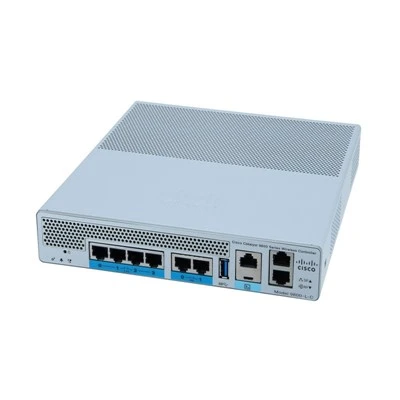
If you’re a municipal IT director, a city manager, or someone who’s looking to launch a small smart city project for your community, we’re here to help. We’ve got experience working with cities of all sizes, from 10,000-person towns to million-person metro areas, and we can help you figure out exactly what you need without selling you extra gear you don’t. Reach out to our team to talk through your project, get a custom quote, or just ask questions about how Aruba routers can fit into your smart city plan.
Wireless APs References:
- International Data Corporation (IDC). "Smart City Infrastructure: Global Market Analysis and Forecasts, 2022–2027"
- Aruba Networks. "Enterprise Network Reliability and Security for Municipal Smart City Deployments"
- U.S. Department of Transportation. "Smart City Technology Use Cases: Traffic and Infrastructure Management"
- Local Government Information Management Association (LGIMA). "Cost Savings in Smart City Network Infrastructure for Mid-Sized Municipalities"
- Environmental Protection Agency (EPA). "Energy Efficiency in Commercial Network Equipment for Municipal Operations"
AITI Tech Limited
AITI Tech Limited is one of the most professional routers for aruba manufacturers and suppliers in China for over 20 years, featured by quality products and low price. Welcome to buy bulk discount routers for aruba in stock here from our factory. If you have any enquiry about pricelist, please feel free to email us.
Address: 6F, Haogong Building, Yannan Road, Futian District, Shenzhen, China
E-mail: kelly@hkaiti.com
WebSite: https://www.hkaiti.com/
