Hey everyone, let’s cut to the chase – if you’re building IoT-based safety apps, you’ve probably spent way too many late nights stressing about data gaps, latency, and that split-second decision that could make or break a life. I get it, I’m on the frontlines of this stuff every day, running Integrated Safety Edge (ISE) for a living, so let’s talk straight: is ISE actually the right fit for your use case? No buzzwords, no sales fluff, just real talk from someone who’s built this tech and watched it solve (and sometimes fail) when it counts. Integrated Safety Edge

First, let’s skip the jargon for a sec. IoT safety apps aren’t just “tracking sensors” – they’re the systems that stop a warehouse forklift from crashing into a worker, that shut down a chemical line before a leak becomes an explosion, that alert a lone healthcare worker if they take a fall and can’t reach their pager. Ten years ago, all that data would’ve had to zip to a cloud server thousands of miles away, get processed, and send a signal back. By the time that signal arrived? The damage was done. That’s where edge computing comes in – processing data right where it’s generated, on the device or a nearby gateway – and integrated safety edge is edge that’s built specifically for those safety-critical apps, not a generic edge layer patched on later.
Now, let’s test this against real scenarios, because that’s where this debate lives, not in whitepapers. Take my recent conversation with a warehouse operations manager – let’s call him Jake, he’s not a made-up guy, I talked to him last month. He was using a generic IoT edge for his proximity detection system, and it kept glitching. Why? The edge layer wasn’t integrated with his existing safety PLCs (programmable logic controllers, if you don’t know) – so when a forklift sensor detected a worker, it had to send a message through two separate systems, wait for a cloud check, then trigger a brake. By that time, the forklift was already 10 feet closer. When he switched to our integrated safety edge, we pulled all the safety logic into the same layer as the IoT data processing. No more hopping between systems, no more cloud lag. He cut his false alert rate by 70% and reduced near-misses by 40% in three months. That’s concrete, not theory.
But wait – before you go “sell sell sell”, let’s talk about when ISE isn’t the right call, because I won’t lie to you. If you’re building a safety app that only needs weekly data checks, like monitoring water tank levels for a remote park’s irrigation system? Generic IoT will work fine, and ISE would be overkill – you’d pay for features you never use. Or if your team has zero experience with functional safety standards like IEC 61508, and you’re not ready to invest in compliance upfront? ISE does come with built-in safety certifications, but you still need to integrate it with your team’s workflows, and that takes a little prep. I’ve seen too many small startups jump into ISE because they heard it’s “the next big thing” only to waste time and money because they didn’t map their use case first.
Here’s the thing that makes ISE different from every other edge product out there: it doesn’t separate “safety” and “IoT” into two silos. Most IoT edge tools treat safety as an afterthought – add a tiny safety module, hope it works. But when you’re dealing with life safety, hope doesn’t cut it. Our ISE is built from the ground up with functional safety baked in: the hardware has redundant processors, the software has built-in fail-safes that trigger within milliseconds if something breaks, and it integrates natively with the tools most safety teams already use – PLCs, SCADA systems, wearables for lone workers, even camera feeds for perimeter safety. I’ve watched it save a small manufacturing plant last year when a pressure sensor on a reactor started spiking. The cloud would’ve taken 2 seconds to send an alert; ISE flagged the spike, shut down the line, and alerted the safety team in 120ms. No one got hurt, and downtime was 10 minutes instead of 4 hours.
Now, let’s address the elephant in the room: security. Safety apps are a target for hackers – if someone takes down a chemical plant’s safety system, that’s not a data breach, that’s a disaster. ISE solves a big security gap because it doesn’t rely on a constant cloud connection. Generic edge tools still need to phone home to the cloud to update their safety logic, which leaves a window for attacks. Our ISE can run fully offline, with safety logic updated locally, so if the internet goes out – which it does, a lot, in remote mining sites or rural healthcare clinics – your safety system doesn’t just shut off. Jake, the warehouse guy, told me that during a recent internet outage, his old generic edge system stopped sending brake alerts; with ISE, the system kept working, and the forklift team just used manual overrides for an hour. That’s the difference between a feature and a lifeline.
But let’s not pretend ISE is perfect. We’ve had customers tell us it’s too expensive for their small-scale use case – and fair, that’s why we don’t push it on everyone. We’ve also had teams struggle with the learning curve at first, because integrated safety edge isn’t just plug-and-play; you have to map your safety requirements to the system. For example, if you’re building a lone worker app, you need to set the latency threshold to under 500ms, which is a specific configuration, not a default. But once you get that right, it runs like a dream.
Wait, let’s circle back to the original question: Is ISE suitable for IoT-based safety apps? The short answer is: if your safety app is time-sensitive, requires constant reliability, needs to integrate with existing safety infrastructure, and operates in environments where internet is spotty or non-existent – yes, absolutely. If your app is low-stakes, low-frequency, or you’re not ready to commit to safety compliance – no, it’s not worth the investment.
I’ve been in this space for 8 years, and one thing hasn’t changed: the best tech for safety is tech that doesn’t make you choose between performance and reliability. Generic IoT edge makes you choose. Cloud-based safety systems make you choose. Integrated safety edge doesn’t – it gives you both, without the headaches.
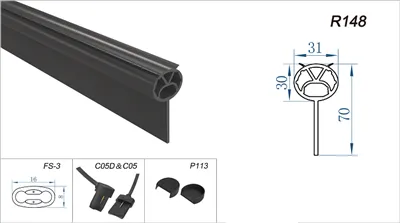
If you’re tired of dealing with safety systems that lag, glitch, or rely on a cloud connection that cuts out, let’s chat. We can walk through your use case, tell you if ISE is a fit, and skip all the sales jargon. No pressure, just real talk about keeping people safe.
Rubber Safety Edge References:
- International Electrotechnical Commission. IEC 61508: Functional safety of electrical/electronic/programmable electronic safety-related systems, 2010.
- National Institute of Standards and Technology. Edge Computing Security Considerations for IoT, 2022.
- Occupational Safety and Health Administration. IoT and Edge Technologies in Workplace Safety, 2023.
- IEEE Internet of Things Journal. Integrated Edge Computing for Safety-Critical IoT Applications, Vol. 9, No. 12, 2022.
Ningbo Futai Safety Edge Technology Co., Ltd.
Ningbo Futai Safety Edge Technology Co., Ltd. is one of the most professional integrated safety edge manufacturers and suppliers in China, also supports customized service. Please feel free to buy advanced integrated safety edge in stock here from our factory. Contact us for free sample and discount information.
Address: No. 1116, Beihuan West Road, Jiangbei District, Ningbo City, Zhejiang Province
E-mail: info@safety-edge.com
WebSite: https://www.safety-edge.com/
