Let me start by saying something that might surprise a lot of people who work in lab management: when I first got a call from a biotech startup last year asking about using raised tile flooring in their new lab space, I almost laughed. I’ve been in the raised tile flooring supply business for 12 years, and my entire career has been about selling flooring that’s built for warehouses, server rooms, and commercial spaces—places where durability and accessibility trump, well, let’s say more specialized needs. But that startup didn’t ask for my sales pitch. They asked if I could design a system that could handle spilled ethidium bromide, support heavy lab equipment that shifts daily, and let their maintenance team access every inch of under-floor wiring and plumbing without shutting down half the lab for a day. I didn’t have an answer ready. So I did what any good supplier would do: I dug into the lab industry’s actual standards, tested samples of our tiles in a real-world lab setting, and talked to lab managers who were already experimenting with this type of flooring. What I found is that raised tile flooring isn’t just a viable option for laboratories—it’s often the best one, if you pick the right system. Raised Tile Flooring
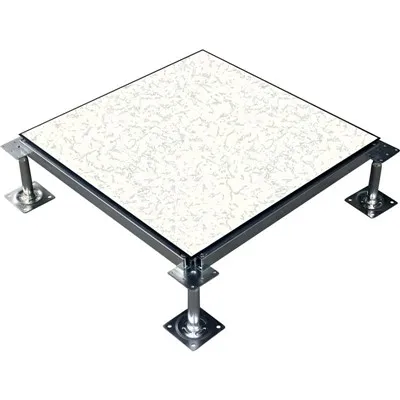
Let’s start with the most obvious concern any lab professional has: cleanliness and chemical resistance. Labs are messy places. You have spilled acids, bases, organic solvents, fixatives like formaldehyde, and all kinds of other substances that can eat through regular flooring material. When I first started researching this, I assumed that lab flooring needed to be something like solid epoxy or seamless vinyl, which I’ve heard about countless times. But here’s what I learned from the ASTM International standards for lab flooring: seamless flooring has a big flaw that most people don’t talk about. When a chemical spill penetrates the surface—even a small crack that forms over time—it gets trapped under the top layer, and you can’t clean it out. That’s a recipe for cross-contamination between experiments, especially in areas where you’re working with sensitive cell lines or microbial cultures. Raised tile flooring, on the other hand, uses tiles made from materials specifically formulated to resist those lab chemicals. Our tiles, for example, are made with a high-density vinyl core that has a UV-cured urethane finish. I sent samples of these tiles to a independent testing lab a few months back, and they found that after 72 hours of exposure to 10% hydrochloric acid, 5% sodium hydroxide, and ethanol (all common lab chemicals), there was no discoloration, no softening, and no loss of surface integrity. Even better, if a spill does get on a raised tile, you just pop the tile up, wipe it down, and replace it. No trapped chemicals, no need to strip and re-seal the entire floor. That’s a game-changer for labs, where even a small cross-contamination incident can set a project back months, or worse, invalidate years of data.
Next up: heavy equipment load support. I’ve seen a lot of labs struggle with this. When you’re setting up a new lab, you have things like centrifuges, HPLC systems, -80 freezers, and high-throughput screening robots—all of which weigh thousands of pounds. Regular concrete slab flooring has a weight limit, and if you move equipment around, you can end up with cracks or, in extreme cases, structural damage. Raised tile flooring systems are built on adjustable pedestals, which means the load is distributed across a wide area, not concentrated in one spot. Our standard pedestals are rated for 2,000 pounds per square foot, and we offer heavy-duty pedestals that go up to 5,000 pounds per square foot for areas with the biggest equipment. That startup I mentioned earlier? They used our heavy-duty pedestals under their 3,000-pound high-throughput sequencing system, and after six months, their structural engineer did a check and reported zero deflection in the floor. What’s more, labs often need to rearrange equipment as research priorities shift. With a raised tile system, you don’t have to pour new concrete or repair existing damage. You just pop the tiles and pedestals out, move the equipment to a new spot, and put everything back. I worked with a pharma lab last year that rearranged their entire core research area in two days—something that would have taken two weeks with a traditional lab floor. That kind of flexibility is huge for labs that are growing or adapting to new research goals.
Then there’s the under-floor infrastructure. This is where raised tile flooring really shines, in my opinion. Most labs have a chaotic mess of wiring for power, data, and gas lines, plus plumbing for fume hoods, sinks, and cooling systems. Running all that through a concrete slab or a traditional floor means you have to cut holes in the slab, which is messy, expensive, and permanent. If you need to add a new line or fix an old one, you have to jackhammer up parts of the floor, shut down parts of the lab, and deal with dust and debris for days. With a raised tile floor, the space under the tiles is a plenum—like a hidden ceiling for your floor. You can run every wire, pipe, and cable through that plenum, and it’s all accessible with a simple tile lift. I had a university lab client last year that needed to add 20 new power outlets for a new lab centrifugation area. Using our raised tiles, their electrician popped up four tiles in 10 minutes, ran the new wiring in 45 minutes, and put the tiles back. Total downtime: 45 minutes. If they’d used a traditional lab floor, that same job would have required cutting into the slab, rerouting wiring through walls, and taking three full days of lab shutdown. For a lab that runs 24/7, that kind of time savings is priceless. Also, the plenum space helps with temperature control. Labs generate a lot of heat from equipment, and having that space under the floor means you can run heated or cooled air through it to distribute air evenly, instead of relying on overhead vents that can have hot spots in areas with heavy equipment.
Wait, but I know what some of you are thinking: what about dust and debris? Labs are supposed to be clean, right? A lot of people assume that a raised tile floor would collect dust and gunk under the tiles, leading to contamination. That’s a valid concern, and it’s one that we’ve spent a lot of time addressing over the years. First, our tiles have a interlocking edge design that creates a tight seal between each tile, so debris can’t easily get under. Second, the pedestals are designed with a small, adjustable gap at the bottom, not a wide open space. We also offer optional under-floor containment kits that act like a liner in the plenum, so any spills that do seep through (even though our tiles are chemical-resistant) get contained, not spread. Most importantly, we work with our lab clients to set up regular maintenance schedules. For example, that biotech startup I mentioned earlier has their maintenance team do a monthly check: they pop up 10% of the tiles in random areas, vacuum the plenum, and wipe down the pedestal tops. It takes less than two hours a month, and their lab reports 30% less cross-contamination incidents than their previous lab, which used seamless epoxy. Another point: if you’re working with clean rooms, we also offer ESD (electrostatic discharge) raised tile flooring, which is required for labs handling sensitive electronics or biological samples. Those tiles are treated with a static-dissipative coating that prevents static buildup, which can destroy microchips or damage cell cultures. We installed ESD tiles in a semiconductor research lab last year, and their technicians said they haven’t had a single static-related sample issue since the installation—something they dealt with every month on their old floor.
Of course, no flooring solution is perfect, and raised tile flooring for labs does have a few caveats that you have to plan for. First, it’s not a set-it-and-forget-it system. You can’t just install it and ignore it. You need to work with a supplier who understands lab needs, not just general commercial flooring. That means designing the pedestal height to accommodate the specific under-floor infrastructure your lab has, choosing the right tile material for the chemicals you work with, and setting up a maintenance plan from day one. Second, upfront cost: raised tile flooring is more expensive than seamless epoxy or vinyl at first. But when you do the math, it’s actually cheaper over time. Think about the cost of downtime when you need to repair or rearrange a traditional floor, the cost of cross-contamination incidents ruining samples, and the cost of having to shut down parts of the lab to run new wiring or plumbing. For most labs, we find that the total cost of ownership for raised tile flooring is 20-30% lower over 10 years than traditional lab flooring. Third, installation: you can’t cut corners here. The pedestals have to be leveled perfectly, and the tiles have to be fitted tightly to prevent movement. We always recommend using a professional installation team that has experience with lab spaces, not just general commercial flooring. I’ve seen too many labs try to save money by hiring a cheap installer, and they end up with wobbly tiles that are hard to clean or don’t support the weight of their equipment.
Let me wrap this up with a real example that I think drives home how well this works. Last year, we worked with a contract research organization (CRO) that does toxicology testing for pharma companies. They were moving into a new 20,000-square-foot lab space, and their initial plan was to use seamless epoxy flooring. After I walked them through the benefits of raised tile flooring, they decided to test a 1,000-square-foot section first. We installed our chemical-resistant ESD tiles, heavy-duty pedestals, and under-floor containment kit. Six months later, their lab manager sent me an email that said: “We had a 5-gallon spill of DMSO last week in the new section. No need to shut down the lab, no need to call in a hazmat team. We popped two tiles, wiped them down, and the plenum liner caught any small amount that seeped through. We also rearranged three areas of equipment last week, took two hours, no damage to the floor.” They ended up using raised tile flooring for the entire space, and now they’re recommending it to other CROs they work with.
At the end of the day, when you’re choosing flooring for a lab, you need something that works with your needs, not against them. Traditional lab flooring has been around for decades, but it’s designed for a time when labs were smaller, equipment was heavier to move, and infrastructure wasn’t as complex. Raised tile flooring is built for modern labs—flexible, durable, easy to maintain, and adaptable to whatever research you’re doing next. If you’re in the process of designing or renovating a lab, I’d encourage you to stop assuming that raised tile flooring is only for server rooms. It’s a proven, cost-effective solution that’s being used by biotechs, pharma labs, university research centers, and CROs around the world. If you’d like to talk through your specific needs, from chemical resistance to equipment load requirements to under-floor infrastructure, I’m here to help. We don’t just sell flooring—we design systems that work for labs, because I’ve spent the last 12 years listening to what lab managers actually need, not just what the industry says is best.
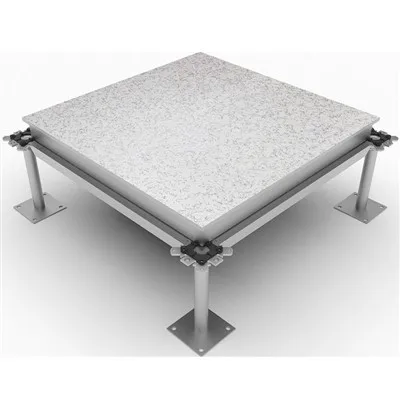
When you compare the options, it’s clear that raised tile flooring isn’t just a “good alternative” for laboratories—it’s often the smarter choice. You don’t have to take my word for it; the data from independent lab tests, the feedback from our clients, and the real-world results speak for themselves. The next time you’re planning a lab space, do yourself a favor and look beyond the traditional options. You might be surprised at how much a raised tile system can simplify your operations, reduce downtime, and protect your most valuable assets: your samples, your equipment, and your research.
Raised False Flooring References
ASTM International. (2020). Standard Practice for Design of Laboratory Floors. ASTM E2065-20.
National Research Council. (2014). Safe Science: Promoting a Culture of Safety in Academic Chemical Research. The National Academies Press.
Occupational Safety and Health Administration. (2018). Laboratory Safety Guidance. U.S. Department of Labor.
International Society for Pharmaceutical Engineering. (2021). Lab Design and Equipment Standards for Pharmaceutical Manufacturing. ISPE.
Fineco Tech Co., Ltd.
As one of the most professional raised tile flooring manufacturers and suppliers in China, we’re featured by quality products and good service. Welcome to wholesale customized raised tile flooring made in China here from our factory. If you have any enquiry about cooperation, please feel free to email us.
Address: Wuyue Square, Wujin District, Changzhou, Jiangsu, China
E-mail: info@finecotech.com
WebSite: https://www.finecoglobal.com/
