If you’ve ever stood on a court—whether a basketball, tennis, or pickleball court—watching a game unfold, you might not spare a second thought for the fence surrounding it. But as a supplier of court fencing materials, I’ve learned that this boundary does more than keep balls in. It stands between players, spectators, and adjacent properties, and in some cases, it has to withstand something no one plans for: fire. Wildfires are becoming more frequent, especially in regions like the western U.S., where hot, dry summers turn even a small spark into a devastating blaze. Last year, a client in Southern California reached out to me panicking after a nearby wildfire burned a neighboring court’s wooden fence to the ground, taking half their perimeter with it. That conversation made me realize how few people—even facility managers who rely on court fences—understand the options for fire-resistant materials. Let’s break down what’s actually available, what works, and what’s worth skipping when you’re shopping for a fence that can hold its own against flames. Court Fence
First, let’s get one thing straight: there’s no such thing as a “fireproof” fence. Any material will burn if exposed to enough heat or flame for long enough. The goal for court fences is fire-resistant materials—products that slow the spread of fire, resist ignition for a set period, and don’t release toxic fumes that could endanger players or spectators. When I first started in this industry 12 years ago, most court fences were either wood or chain-link with a vinyl coating. Wood is cheap, easy to install, but it’s tinder. Vinyl? It melts and drips, which can spread fire faster than the wood it’s attached to. We learned that the hard way in 2018, when a commercial park in Arizona installed vinyl-coated chain-link around their tennis courts. A small brush fire jumped the perimeter, and the vinyl coating melted, leaving sticky, flammable residue that caught the surrounding dry grass on fire. That’s when clients started asking for alternatives, and we began testing different materials to find what actually holds up.
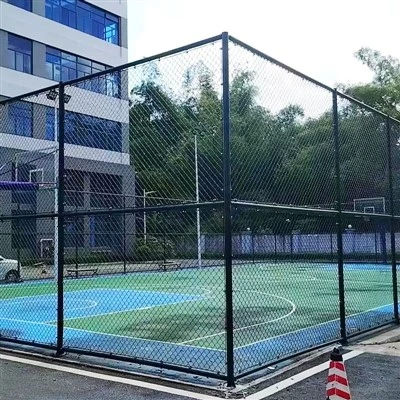
The most common fire-resistant option we recommend to clients is galvanized steel. Now, I know what some of you might be thinking: steel melts at about 2,750 degrees Fahrenheit, which is hot enough to turn most building materials to slag. But here’s the catch: most wildfires only reach temperatures between 1,500 and 2,000 degrees Fahrenheit, and they don’t stay at that peak for more than 10 or 15 minutes. Galvanized steel has a zinc coating that acts as a heat shield. When exposed to flame, the zinc vaporizes first, absorbing heat and slowing the temperature rise of the steel underneath. For small to medium wildfires— the most common type that courts face—galvanized steel won’t ignite, won’t release toxic gases, and will stand up to heat for 30 minutes or more, which is enough time for firefighters to contain a blaze. I’ve seen galvanized steel fences survive wildfires that burned 50 feet away from them, while wooden fences within 20 feet were completely destroyed. That said, not all steel is created equal. We only use hot-dip galvanized steel, not the thin, electroplated steel some cheaper suppliers use. Electroplated zinc is thinner, so it vaporizes faster, leaving the steel exposed earlier. For a court fence, you also want a gauge of steel that’s sturdy enough to withstand both fire and the occasional stray basketball. A 12-gauge galvanized steel post and 11-gauge galvanized chain-link mesh is the sweet spot—we’ve installed that exact setup at over 200 courts in wildfire-prone areas, and only one client reported minor warping after a fire that was within 15 feet, and even that fence was still standing, just slightly bent.
Another material that’s gaining traction for fire-resistant court fences is aluminum. Lightweight, corrosion-resistant, and naturally non-combustible, aluminum is a great option for facilities that don’t want the heavy feel of steel. Pure aluminum’s melting point is around 1,220 degrees Fahrenheit, which is actually lower than the peak of many wildfires. But here’s the thing: aluminum doesn’t catch fire. It will soften when exposed to high heat, but it doesn’t burn, and it doesn’t drip flammable material. We installed aluminum fencing for a high school in Oregon a few years back, after the school’s previous wooden fence burned down in a 2020 wildfire. Two years later, when a small brush fire broke out on the edge of the school’s property, the aluminum fence stayed intact. The only damage was a few scuffs from falling embers, and the school didn’t have to replace a single panel. The downside? Aluminum is more expensive than steel, and it’s not as sturdy if you have a court where kids might lean on the fence, or where heavy equipment needs to pass near it. We usually suggest aluminum for smaller residential or community courts, while steel works better for larger commercial facilities that see more wear and tear.
Wait, what about composite materials? I get asked about composite all the time—they’re marketed as low-maintenance, termite-proof, and fire-resistant. Most composite materials are made from wood fibers and plastic, and some manufacturers claim they’re Class A fire-rated, the highest rating for building materials. But I’ve seen too many composite fences fail in fires to recommend them for court use. A few years ago, a developer in Florida installed composite fencing around a new pickleball complex to avoid the maintenance of wood. Last year, a lightning strike set a small fire near the courts, and the composite panels caught fire almost immediately. They burned faster than wood, releasing thick, toxic black smoke that forced the complex to evacuate for two hours. The problem is that most composites use thermoplastic binders, which melt and burn when exposed to heat, instead of the fire-retardant additives manufacturers claim to include. If you’re set on composite, look for ones that are made with mineral-based binders instead of plastic—those are less flammable. But even then, they’re not as fire-resistant as steel or aluminum, and they cost almost as much as steel, so it’s not worth the trade-off for court fencing.
There’s also treated wood, which some people see as a middle ground between cheap, flammable natural wood and expensive metal. Pressure-treated wood is infused with chemicals like copper azole to resist rot and termites, and some brands add fire retardants during the treatment process. But here’s the thing: even fire-treated wood will burn when exposed to enough heat. The fire retardant only slows ignition, not stops it. I’ve had a client in Colorado swear by fire-treated wood until a wildfire in 2022 burned through his neighborhood, and his fence—even with the fire treatment—caught fire within 10 minutes, because the embers landed on the wood and the treatment wore off over time. If you use treated wood, make sure it’s regularly re-treated every 5 years, and keep it at least 30 feet away from dry grass or brush to reduce fire risk. But for a court fence, metal is still a more reliable option, in my experience.
Now, it’s not just the material of the fence panels and posts that matters—what’s around the fence matters too. I always tell clients that a fire-resistant fence is only as good as its surroundings. If you have dry grass, dead leaves, or brush within 10 feet of the fence, embers from a fire will land there and spread to the fence before it even has to stand up to direct flame. We recommend clearing a 10-foot fire break around any court with a metal fence—keep it mowed, remove all dry vegetation, and consider using gravel or non-flammable ground cover in that zone. Also, if you’re using chain-link, make sure it’s not topped with wooden rails or plastic caps. Those small, flammable additions can be the first part of the fence to catch fire. We use aluminum or galvanized steel top rails on all our chain-link fences, and we never add anything flammable to the perimeter.
Another consideration is fire ratings. When you’re shopping for materials, look for Class A fire rating, which means the material has a 0 to 25 flame spread index—meaning it spreads fire the slowest. Steel and aluminum both have a Class A fire rating, which is required for many public facilities in wildfire-prone areas now. Some manufacturers will try to sell you materials with lower ratings, claiming they’re “good enough,” but when a fire hits, that lower rating means the fence could ignite in minutes. Always ask for documentation of the fire rating—don’t just take a salesperson’s word for it.
Let me share a recent example that made me even more passionate about this. Last summer, I worked with a youth sports complex in Texas that was replacing their old wooden fences around 12 basketball courts. The complex was in a semi-rural area, where wildfires from nearby dry fields are a threat. The previous fence had burned through two sections in 2021, so the facility manager was determined to get something that would last. We installed galvanized steel fences with a 10-foot fire break around the entire perimeter. A month after installation, a wildfire broke out in the fields behind the complex. The fire department said the flames reached 1,800 degrees within 50 feet of the new fence. When the fire died down, the only damage to the fence was a few tiny scorch marks on the bottom of the posts from embers—no burning, no warping, no need for repairs. The facility manager told me that same week, a neighbor’s wooden fence burned to the ground. That’s the difference choosing the right material makes.
I know cost is a big factor for most clients. Galvanized steel is about 15% more expensive than a basic wooden fence, and aluminum is about 25% more. But when you consider the cost of replacing a fence after a fire, plus the downtime of a court that’s unusable for weeks or months while you wait for repairs, it’s worth it. We also offer flexible payment plans for public facilities and residential complexes, so you don’t have to pay the full cost upfront. And for clients in high-fire-risk areas, we offer a 10-year warranty on our galvanized steel fences against fire damage—no other supplier I know offers that.
If you’re in the market for a court fence, especially in a region prone to wildfires, don’t cut corners on fire resistance. A fence isn’t just a boundary—it’s a safety feature. It can protect your players, your property, and even your neighbors from the spread of fire. I’ve been in this business long enough to see how a bad choice of material can turn a manageable small fire into a disaster. That’s why we don’t sell anything but galvanized steel and aluminum for fire-resistant applications—we know they work, because we’ve seen them work firsthand.
If you’re ready to learn more about your options, or if you have questions about fire-resistant materials for your specific court, don’t hesitate to reach out. We can walk you through the different materials, help you calculate what’s best for your space and budget, and even send out a free inspection of your current perimeter to identify fire risks. A court is a place for fun and competition, and it should also be a place where you feel safe. Let’s make sure your fence helps keep it that way.
Windbreak Wall References
- National Fire Protection Association. (2022). Wildland-Urban Interface Fire Safety for Recreational Facilities.
- International Code Council. (2021). Fire Resistant Building Materials for Outdoor Perimeter Fences.
- U.S. Department of Agriculture Forest Service. (2020). Fire Break Guidelines for Recreational Court Perimeters.
- Steel Framing Alliance. (2023). Galvanized Steel Performance in Wildfire Conditions.
- Aluminum Association. (2022). Non-Combustible Aluminum Fencing for Fire-Prone Areas.
Anping County Chengrun Metal Products Co., Ltd.
With abundant experience, we are one of the most professional court fence manufacturers and suppliers in China. Please feel free to buy premium court fence for sale here from our factory. All customized metal products are with high quality and competitive price.
Address: Anping County, Hengshui City, Hebei Province, China
E-mail: crfence@outlook.com
WebSite: https://www.chengrunfence.com/
