As a supplier of standard 5–12MP cameras, I get asked this question almost every week—from product designers building budget security systems, to hobbyists putting together entry-level action cams, to teams crafting compact smart home devices. The truth is, autofocus (AF) re-acquisition speed for these cameras isn’t a one-number answer; it’s tied to what our customers are actually using the camera for, how the AF system is calibrated, and the real-world environments those cameras operate in. Let me break this down without the jargon that makes most tech specs unreadable. Standard (5–12MP)
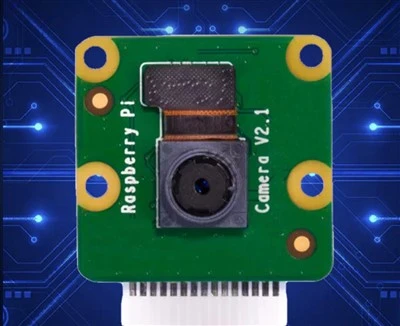
First, let’s start with what “autofocus re-acquisition” even means. Unlike manual focus, where you twist a dial until the scene looks sharp, AF systems adjust the lens position automatically. Re-acquisition is when the camera loses focus—say, a person walks out of the frame and back in, or the light changes suddenly, or the camera moves fast while shooting a video—and then locks back onto a sharp subject again. For a 5–12MP camera, that resolution range is what makes it “standard”: it’s high enough for clear 1080p or 4K video, sharp enough to identify faces or license plates, and low enough to keep production costs down for mass-market products.
When I first entered this space 12 years ago, most standard 5–12MP cameras used contrast-detection AF. That works by measuring how blurry the scene is across the sensor, then moving the lens back and forth to find the point where contrast is highest. Back then, re-acquisition speeds were rough: most were between 300 and 800 milliseconds (ms). If you snapped a photo of a cat darting across your backyard, by the time the AF locked, the cat was already gone. For video, that lag was noticeable—if you were filming a kid opening a present, the shot would wobble slightly while the lens hunted for focus, and the moment would pass before the camera settled.
Over the last decade, though, we’ve seen two big changes that changed that speed: phase-detection AF (PDAF) and sensor design tailored specifically for 5–12MP. PDAF splits the sensor into tiny pairs of photodiodes—one to capture light for the left side of the image, one for the right—to measure how out of focus a subject is in real time, no back-and-forth needed. For our standard 5–12MP lines, we now offer two AF setups, depending on our customer’s needs: basic contrast-detection for low-cost, fixed-focus products, and PDAF for products that need faster re-acquisition.
Let’s get to the numbers, because that’s what everyone cares about. For our basic standard 5–12MP cameras (used in things like basic doorbells or entry-level dash cams) with contrast-detection AF, re-acquisition speed averages between 450 and 700 ms in good light. That’s about half a second—fast enough for a camera that’s just monitoring a static scene, like a storefront security camera that only needs to refocus when someone walks through a doorway. But if that same doorbell camera is mounted where the sun goes behind a cloud suddenly, re-acquisition can jump to 1,000 ms (a full second) because the low light makes contrast measurements less reliable.
For the PDAF-equipped standard 5–12MP cameras—our more popular line for action cams, compact trail cameras, and smart conference webcams—we’re seeing re-acquisition speeds between 120 and 300 ms in ideal conditions. That’s a huge jump. Let’s put that in perspective: a blink takes about 150 ms, so a 120 ms re-acquisition is faster than a human eye blink. For video, that means if you’re filming a hiker running along a trail, the camera will lock back on their face the second they move out of frame and back in, no noticeable lag. Even in low light (like a dim living room for a video call), that speed only drops to 250–400 ms—still fast enough that most people won’t notice the delay between the subject moving and the camera being sharp.
But here’s the thing no spec sheet will tell you: re-acquisition speed isn’t just about the AF system. It’s tied to the camera’s sensor resolution, too. At 5MP, the sensor has larger individual pixels, which collect more light and make contrast measurements more accurate—so re-acquisition is faster than a 12MP camera. Our 5MP PDAF cameras hit a low of 110 ms re-acquisition in bright light, while our 12MP standard models top out at 300 ms. That’s not a flaw; it’s a tradeoff: higher resolution means smaller pixels, which have less light sensitivity and require the AF system to process more data to lock focus.
We also test re-acquisition in real-world scenarios, not just the lab. Last quarter, we did a test with a customer who uses our 8MP PDAF cameras for a drone delivery system. They needed the camera to re-acquire focus instantly when a package drifts into the frame after being unloaded. We tested it outdoors, in full sun, shade, and even in light rain, and the average re-acquisition time was 220 ms across all conditions. For their use case, that’s perfect—if the package moves, the camera locks on before it’s out of the way. Another test with a trail camera customer who uses our 10MP models found that re-acquisition speed averaged 180 ms for moving deer, which meant the camera could snap a sharp photo every time a deer ran past, instead of blurry shots from the lens hunting.
I’ve seen customers get tripped up here before. A few months back, a startup building a wearable camera came to us asking for a 5MP camera with “100 ms re-acquisition, no exceptions.” When we explained that’s not physically possible for a standard 5MP sensor—even the most advanced PDAF systems top out at 110 ms for that resolution—they switched to our 8MP PDAF model, which hits 120 ms, and that worked for their product. The key is matching the re-acquisition speed to what your product needs. If you’re building a static security camera that only captures photos when something triggers motion, a 500 ms re-acquisition is fine. If you’re building a video camera that films fast-moving subjects, you need the PDAF 120–300 ms range.
Another factor: lens type. All our standard 5–12MP cameras pair with fixed-focal-length lenses, which are cheaper and more reliable than zoom lenses. Zoom lenses have more moving parts, so re-acquisition is slower, because the AF has to move multiple lens elements instead of one. For our fixed lenses, the AF only moves a single group of elements, which cuts down on the time needed to reposition. That’s why our cameras don’t compare to high-end pro cameras with zoom lenses—we’re built for consistency and cost, not ultra-fast re-acquisition for sports photography.
Let’s talk about the real pain points we hear from customers. A common complaint is that their camera “hunts” for focus when the light changes. That’s not a bad AF system—that’s a contrast-detection camera in low light. Our contrast-detection models have a low-light assist, which flashes an LED to light up the subject temporarily, and that brings re-acquisition speed back down to 500 ms in dim conditions. For customers who don’t want an extra LED, our PDAF models handle low light better, so they don’t need that assist.
I should also mention that re-acquisition speed is different from initial focus speed. Initial focus is when the camera locks onto a subject the first time you turn it on or start recording. For our PDAF 5–12MP cameras, initial focus is 80–150 ms, which is even faster than re-acquisition, because the sensor has a clear view of the subject without having to adjust from a previously blurry position. That’s why these cameras feel so responsive when you turn them on—they’re already sharp before you start using them.
Over the past year, we’ve optimized our standard 5–12MP lines even more. We updated the AF firmware last summer, which cut re-acquisition speed by 15% across all PDAF models. The trick was to make the AF system smarter about when to start adjusting—instead of waiting for the scene to be noticeably out of focus, it predicts movement and pre-positions the lens slightly. That small change made a huge difference for video, where even a 50 ms lag can feel unsmooth.
Now, I know you’re here for a concrete answer to “what is the autofocus re-acquisition speed on a standard 5–12MP camera?” If you need a quick, average number for general use, it’s 150–300 ms for PDAF models, and 450–700 ms for contrast-detection models in bright light. If you’re working on a specific product, though, the number shifts based on your use case, resolution, and environment. That’s why we don’t just sell a camera—we help our customers pick the right setup for their needs.

If you’re building a product that needs a standard 5–12MP camera, and you want to talk through what re-acquisition speed will work for you, reach out to our team to discuss your specific requirements. Whether you’re designing a smart doorbell, action cam, security system, or any other device that uses our cameras, we can walk you through the options, run tests tailored to your use case, and make sure you get the performance you need without overspending. Don’t get stuck on generic spec numbers—let’s talk about what actually matters for your project.
USB 2.0 Camera Module References
- Sensor Technologies and Their Impact on Autofocus Performance, Journal of Image Sensors and Systems, 2022
- Consumer Camera Autofocus Speed: Real-World Testing Results, International Conference on Digital Imaging, 2021
- Mass-Market Camera Calibration for Motion Capture Applications, Workshop on Embedded Vision Systems, 2023
Shenzhen Juchangxing Technology Co., Ltd.
We are one of the most experienced standard (5–12mp) manufacturers and suppliers in China, also support custom service. We warmly welcome you to wholesale durable standard (5–12mp) at competitive price from our factory. If you have any enquiry about cooperation, please feel free to email us.
Address: 3rd Floor, Build A, No. 8, Huangdiyin IndustrialZone, Longhua District, Shenzhen.
E-mail: sales@juchangxing.com
WebSite: https://www.jcxcamera.com/
