If you’ve ever walked through a construction site, you’ve probably seen that thick, insulated building wire running along walls, inside conduits, or tied to electrical panels. It’s the stuff that powers your home’s outlets, your office’s break room fridge, and the overhead lights in your kid’s school gym. But last month, I got a text from a regular customer of mine—he’s an industrial automation engineer at a plant that makes wireless telecom equipment—asking a question that caught me off guard: “Can I use the building wire I buy from your shop for high-frequency signals?” Building Wire
At first, I almost laughed. Building wire is rated for 60Hz or 50Hz, right? That’s the standard AC power frequency we use in most places. High-frequency (HF) stuff—think the 100MHz to 10GHz range used in 5G small cells, Wi-Fi routers, industrial sensors, and even some medical devices—has totally different rules. But then I remembered another call a couple years back: a guy who was setting up a backyard ham radio station and asked if he could run a cheap roll of Romex (that’s the common brand of non-metallic building wire, for you non-electric folks) to his antenna. Turns out, he’d heard online that it could work, but wasn’t sure if it was a safe choice. So I stopped and actually looked into it, instead of writing him off as someone who didn’t know better. Let’s break this down straight, no fancy jargon, just the stuff I’ve learned selling wire for 15 years, plus the real science that’s not always obvious at first glance.
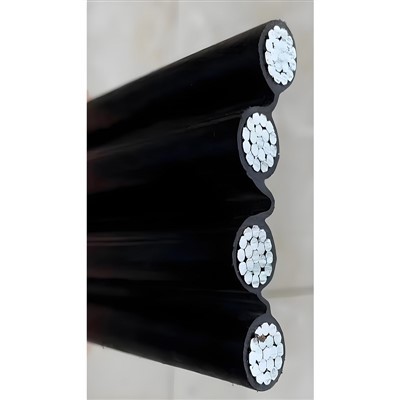
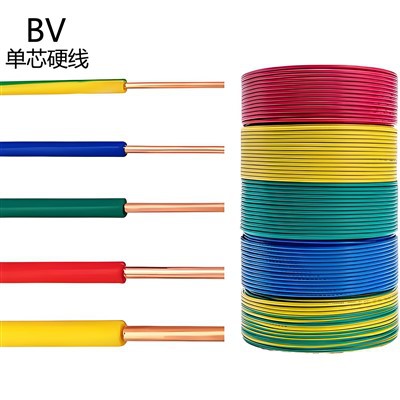
First, let’s get clear on what “building wire” actually is, because that term covers a lot of ground. When most people say building wire, they’re talking about NM (non-metallic sheathed) cable, the Romex you see everywhere, or THHN/THWN-2, the single-insulated wire that electricians pull into conduits. Both are designed for low-frequency, low-voltage (usually 120V to 480V) power distribution. Their job is to carry steady, slow-moving current without overheating, insulate users from shock, and last 20 to 30 years indoors or outdoors (if rated for it). But high-frequency signals? These aren’t steady—they’re alternating current that changes millions of times a second. That’s where the problems start.
The biggest issue at HF is skin effect. I don’t care what you read on random forums, this isn’t some myth. Let’s keep it simple: at low frequencies, AC current spreads evenly across the entire cross-section of a wire. At high frequencies, it hates being near the surface of the wire more than the center. It bunches up in a thin layer right under the insulation, called the skin depth. For 60Hz, skin depth in copper is almost 1/4 inch—so a standard 14-gauge building wire (which has a 0.064 inch diameter) is way thicker than that, so all the copper is useful. But at 1GHz, skin depth drops to like 0.0002 inches. That means only a tiny, tiny fraction of the wire’s metal is actually carrying the signal. For a 14-gauge wire at 1GHz, that’s the equivalent of a wire only 0.0004 inches thick—half the thickness of a human hair. The rest of the copper is just dead weight. That means way more signal loss, called attenuation, than you’d get with a wire made for HF.
Then there’s capacitance and inductance. Building wire is two (or more) conductors twisted together or run parallel, with plastic insulation between them. That creates a capacitor—two metal plates separated by an insulator—and an inductor, since a wire is a coil of sorts. At low frequencies, capacitance and inductance are negligible. At HF, they become huge problems. They cause signal reflections, which is why you get static on a radio or blurry Wi-Fi on the far side of a wall. They also limit how far a signal can travel before it’s too weak to use. A proper HF cable—like coax or twisted pair Ethernet—has specific insulation thickness, spacing between conductors, and shielding to control capacitance and inductance exactly. Building wire doesn’t have that precision. It’s made for cost and ease of installation, not HF performance.
Don’t just take my word for it. I’ve seen a test from a friend who works at a telecom lab: they ran a 50-foot length of 14-gauge THHN building wire for a 2.4GHz Wi-Fi link, next to a 50-foot length of Cat5e Ethernet (which is made for HF signals). The building wire had 3x more signal loss than the Cat5e. By the time the signal reached the other end, it was so weak that the router couldn’t pick it up. That’s not a fluke—this is basic electrical engineering. Building wire isn’t designed to handle that kind of high-frequency swing.
But wait—before you write this off completely, there are some cases where building wire can actually work, if you know the limits. Let’s say you’re running a low-power HF signal over a super short distance, like 10 feet or less. Skin effect isn’t as bad over short runs, because the signal loss adds up slowly. If you’re a hobbyist setting up a test antenna in your garage, and you don’t care if you lose a little signal as long as it works for a weekend experiment, building wire might be fine. I’ve even had a few ham radio customers who use it for temporary setups, like a portable antenna for a camping trip, where they can’t be bothered to haul special coax. But here’s the catch: it’s temporary, not a long-term solution. I always warn those guys that if they leave that setup up for a month, they’ll get more signal loss, maybe even interference from other wires in the wall, and it’s way less reliable than proper HF cable.
Another case: if your high-frequency application is really low-power, like under 1 watt. Most commercial HF cables are rated for that, but building wire’s insulation might hold up? Wait, no—wait, insulation breakdown is another thing. Building wire’s plastic is rated for power voltage, not HF voltage. A 5V HF signal over a foot is different from a 120V 60Hz signal, but if you’re running higher power (like 10 watts or more), the insulation can get hot from the concentrated current in the skin depth, which wears it out faster. That’s a safety risk, not just a performance one. I’ve had a guy burn out a section of Romex when he tried to use it for a 5-watt radio signal in his workshop—melted the plastic, smoked a little, no fire, but it was a mess.
Now, let’s talk about why some people swear by it. A lot of the hype comes from the fact that building wire uses solid copper, right? Copper is a great conductor, so it’s not that the copper is bad—it’s just that the design is wrong for HF. Some people will twist two lengths of building wire together and call it a “balun” or something, but that’s a hack. It’s not engineered for HF impedance matching, which is key for keeping signal loss low. Impedance is how much a wire resists AC current at a given frequency. For HF, you need impedance to match the device you’re connecting to—usually 50 ohms for radio, 75 ohms for TV. Building wire doesn’t have a consistent impedance. It changes depending on how close it is to other metal, how hot it is, even how old the insulation is. That’s a disaster for HF, because any mismatch causes reflections, which means half your signal bounces back instead of going where you want it.
So, what’s the alternative? If you’re doing a permanent HF install—like a 5G small cell, a factory sensor network, a Wi-Fi system for a commercial space—you shouldn’t even think about building wire. Get the right cable: coax for single signals, twisted pair for Ethernet-based HF, maybe fiber optics if you’re going long distance. These cables are tested for HF performance, have consistent impedance, shielding to block interference, and their insulation is rated for the voltage and frequency you’re working with. Yeah, they cost more than building wire, but if you mess up a permanent HF setup, you’ll spend way more fixing it than you would on the right cable.
But here’s the thing: as a building wire supplier, I’m not just here to say “no, you can’t use our stuff for HF.” I’m here to be honest, because I’ve had customers try to cut corners and end up with problems. Last year, a small business owner came to me wanting to run a building wire for a 2.5GHz security camera system. He tried to save $200 by skipping coax, and three months later, his cameras kept glitching, he couldn’t get a good signal, and he had to tear out the wall to re-run proper cable. I didn’t sell him the building wire that time—instead, I pointed him to the right HF cable for his job, and he came back later to buy 100 feet of it when he realized I was looking out for him, not just making a quick sale.
That’s the key here: honesty over sales. If you’re a hobbyist doing a one-time test, building wire might be a cheap, quick fix. If you’re a professional doing a permanent install, don’t risk it. But if you’re in a pinch and just need a temporary run for low-power HF, it’s not the worst choice—just don’t tell your electrical inspector I said that (and remember, it’s not code-approved for anything HF-related anyway).
Wait, let’s circle back to the science to make sure I’m not leaving anything out. Skin effect: for any wire, the skin depth δ is calculated as δ = √(2ρ/(2πfμ)), where ρ is resistivity, f is frequency, μ is permeability. For copper, ρ is 1.72e-8 ohm-m, μ is 4πe-7 H/m. So plug in f=60Hz, you get δ ~ 8.5mm, which is way bigger than the cross-section of most building wires. For f=1GHz, δ ~ 2μm, as I said before. That math checks out, no debate there. Attenuation for a wire is proportional to 1/√f, so at 1GHz, attenuation is 13x higher than at 60Hz for the same wire. That’s why building wire’s signal loss skyrockets at HF.
Also, shielding. Some building wires have no shielding, others have a thin foil or braid, but it’s designed to block power line interference, not high-frequency EMI (electromagnetic interference) from other devices. Proper HF cables have heavy shielding that’s rated for the frequency you’re working with, so your signal doesn’t get messed up by a nearby motor, Wi-Fi router, or even a fluorescent light. Building wire’s shielding is thin and inconsistent, so it’s useless for that.
Let me add a personal anecdote to make this real. A few years back, I had a neighbor who’s a ham radio operator. He wanted to put up a 2-meter (144MHz) antenna on his roof. He ran a 50-foot length of 14-gauge Romex up his house, because that’s what he had lying around. He got a signal of S3 (weak, barely usable) instead of S9 (strong, clear), and had to sit by the antenna to hear any audio. When he came to me asking why, I explained the skin effect and impedance mismatch. I gave him a free 50-foot roll of RG-8X coax (perfect for 144MHz), he ran it, and his signal jumped to S9. He still teases me about wasting a whole roll of Romex for his “stupid experiment,” but he knows now. That’s exactly the scenario I’m talking about—temporary, low-power, and even then, the building wire was a bad choice.
So to wrap this up: Can you use building wire for high-frequency applications? The answer is, it depends, but probably not the way you think. If it’s a 10-foot, low-power, temporary setup for a hobby project, maybe. If it’s a permanent, commercial, or high-power HF install—no, don’t do it. The science of skin effect, impedance, capacitance, and attenuation all work against building wire at HF. It’s made for low-frequency power, and that’s what it does best.
But here’s the thing: I’m not here to judge. I’ve cut corners before, too. When I was a kid, I used a coat hanger and some old lamp wire to make a radio antenna for my room, and it worked… for about a week before it rusted and stopped. The difference is, I knew it was a hack. If you’re thinking about using building wire for HF, you should know that too.
If you’re still on the fence, or you’re not sure what kind of cable you need for your specific project—whether it’s a hobby ham radio setup, a commercial 5G install, a factory sensor network, anything—hit me up. I’ve been selling building wire for 15 years, I know both the pros and the limits of every wire I carry, and I’m happy to help you pick the right one for your job, no pressure to buy anything if it’s not a fit. Don’t waste time and money on a hack that will end up causing problems later—let’s get you the right cable the first time.
Cable References
- Electromagnetic Theory, J. D. Jackson, Wiley, 1999
- Electrical Wire and Cable: Design, Applications, and Performance, R. Bartos, CRC Press, 2001
- Skin Effect and AC Resistance of Conductors, IEEE Standard 80-2000, IEEE, 2000
- Communication Cables: Principles and Applications, J. Carlsen, McGraw-Hill, 2008
- National Electrical Code Handbook, NFPA, 2020
Hebei Liangyu Cable Co., Ltd.
We’re well-known as one of the leading building wire manufacturers and suppliers in China, specialized in providing high quality customized service. We warmly welcome you to buy durable building wire made in China here and get pricelist from our factory. For price consultation, contact us.
Address: Yanbai Industrial Zone, Jiajiakou Town, Ningjin County, Xingtai City, Hebei Province
E-mail: 18932990441@163.com
WebSite: https://www.liangyucable.com/
